Oshkosh, Grid Aero Partner to Scale Lifter Drone Production
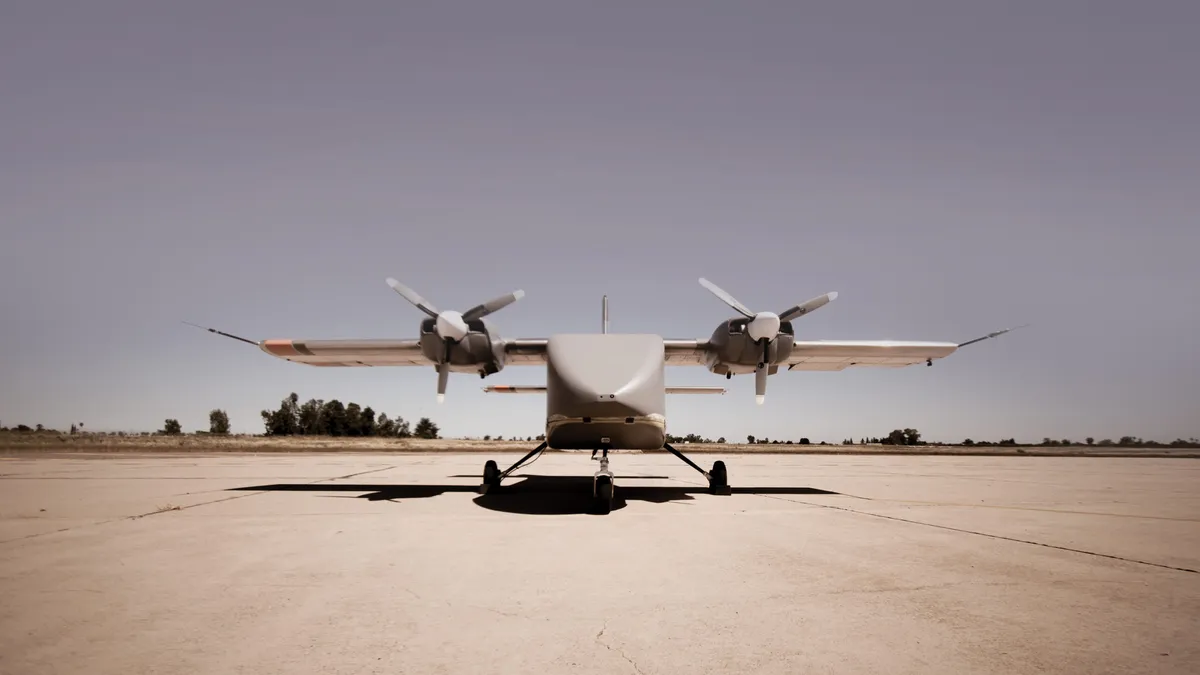
The timing signals a deliberate Pentagon strategy to bypass traditional UAS primes on affordability. Northrop, General Atomics, and Textron have optimized for high-margin ISR platforms (MQ-4C, MQ-9); Lifter's modular cargo-hauler design appeals to a different buyer—INDOPACOM logistics, Special Operations transport, and forward-area resupply.
Oshkosh's JLTV supply chain (tier-2 suppliers, domestic tooling, high-volume stamping) transfers directly to airframe production, which means Grid Aero avoids the aerospace-supplier premium that has kept large UAS costs north of $50M per unit. If Lifter lands below $15-20M at rate, it reshapes the Group 4/5 market and forces Northrop and GA to either compete downmarket or cede volume to a new entrant.
Oshkosh is betting the Pentagon's appetite for affordable, mass-produced Group 4/5 drones will absorb industrial capacity that legacy primes have left on the table.
The partnership stacks manufacturing discipline (Oshkosh's JLTV production experience) against a clean-sheet airframe design, which compresses the usual 5-7 year path from prototype to rate production into roughly 3-4 years. Grid Aero expects six to 12 months of prototype testing, then pilot-line launch in late 2027; if that timeline holds, Lifter reaches initial operational capability by 2029-2030.
Watch whether the Pentagon commits to a pre-production buy — a Lot 1 contract — within the next 18 months. Without that anchor, the pilot line becomes a corporate bet, not a defense-industrial commitment.
What is the actual unit cost target for Lifter at rate production, and has Oshkosh committed to a specific price-per-airframe that justifies Pentagon bulk-buy economics?
Fault Lines
Strategic intelligence, synthesized daily — with a public track record. Every call graded against what actually happened.