Pentagon Tests Ukrainian Drone Tactics in Florida Exercise; Counter-Drone Doctrine Shifts
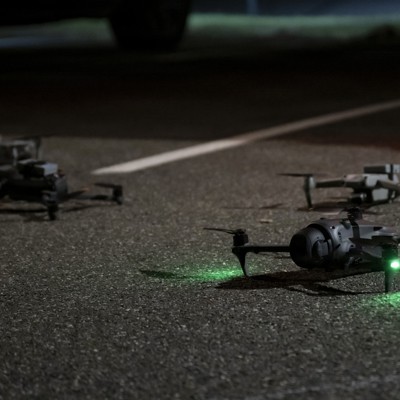
Ukraine's success with coordinated drone strikes has forced the U.S. military to rethink air defense architecture for peer conflict, which in turn drives procurement decisions that favor distributed, networked systems over centralized platforms.
This directly affects force design for Taiwan contingency planning—the PLA has invested heavily in drone swarms, so the counter-drone capability tested in Florida becomes a readiness variable for Pacific Command. Raytheon's Coyote and Northrop's RQ-180 derivatives are in competition for this role, and the exercise outcome will determine which platform gets LRIP funding and which gets starved.
The Pentagon is operationalizing lessons from Ukraine's 2022-2026 experience with cheap, coordinated drone strikes—not as a theoretical exercise, but as a forcing function for counter-drone procurement and doctrine.
This matters because it validates a threat model that legacy air defense (Patriot, SHORAD) was not designed to handle, and it accelerates demand for layered drone-killing platforms: short-range kinetic (Stinger, Phalanx variants), medium-range directed energy, and networked command-and-control.
Raytheon, Northrop, and L3Harris all have competing offerings in this space, but the exercise outcome will determine which architectures the building actually funds in FY27-28 FYDP. If the exercise revealed gaps in any one vendor's solution, that vendor loses market share; if it validated an integrated approach, it consolidates procurement around one prime or a tight consortium.
The timing matters too: this is happening while three carrier strike groups are in the Middle East under orders to shoot Iranian mine-laying boats—meaning counter-drone doctrine is not abstract but operationally live.
Which specific counter-drone systems or architectures did the Pentagon test, and did any fail to meet the engagement thresholds set by the exercise parameters?
Fault Lines
Strategic intelligence, synthesized daily — with a public track record. Every call graded against what actually happened.