Saronic Launches First Marauder MUSV; Autonomous Surface Vessel Enters Trials Under One-Year Development Cycle
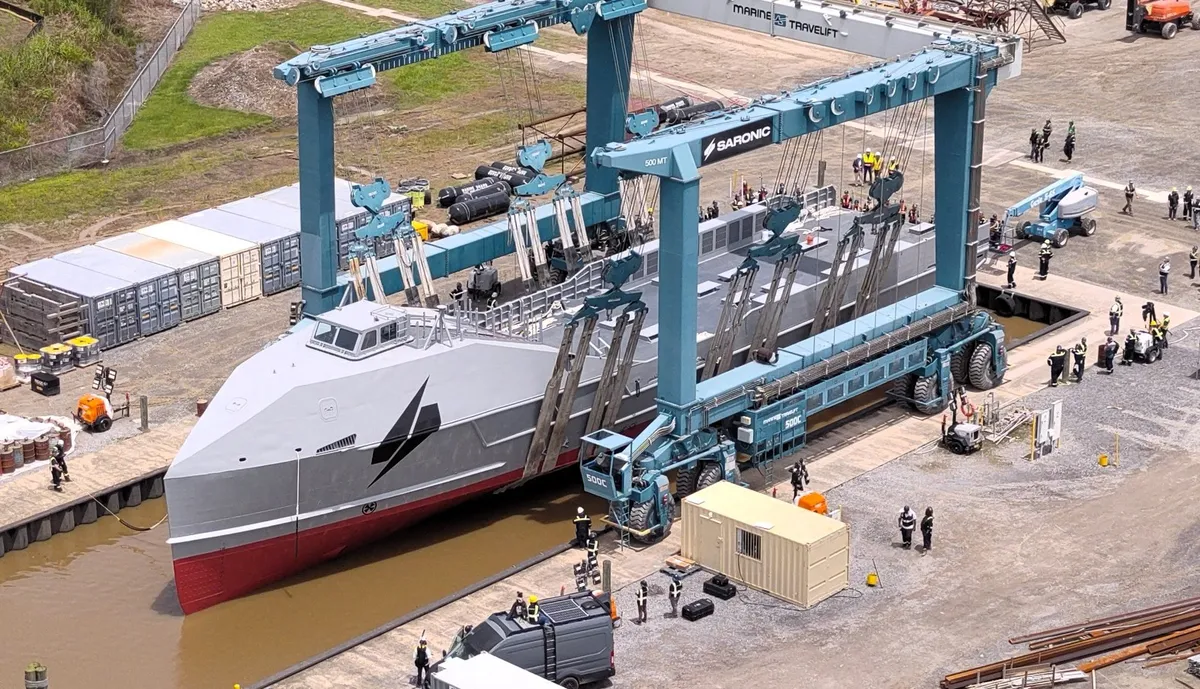
The speed-to-water matters because it suggests the design is modular and the manufacturing process is not constrained by the shipyard capacity bottlenecks that plague traditional surface combatant production. If this holds across multiple hulls, it creates a cost-per-unit advantage that could shift Navy procurement toward distributed autonomous networks rather than large-deck platforms.
Conversely, if the first hull is a showcase and production stumbles on the second or third unit, the timeline collapses — and the Navy's confidence in autonomous surface platforms as a near-term force multiplier evaporates.
A sub-12-month design-to-water timeline for a medium-class USV signals that small-batch autonomous surface platforms are approaching the production velocity of manned fast-attack craft — a constraint that directly affects Navy force structure planning.
If Saronic sustains this cadence, the cost-per-hull and deployment flexibility of MUSVs become competitive with manned surface combatants in specific mission sets (ISR, mine countermeasures, strike coordination), which forces NAVSEA to revalue the force structure mix in the FY27-FY28 surface warfare plan.
Watch whether the Navy requests MUSV procurement line-items in the FY27 budget amendment or continues treating autonomous surface platforms as R&D rather than operational inventory.
What is the actual unit cost of the Marauder, and does Saronic have a Navy contract or only a commercial development program?
Fault Lines
Strategic intelligence, synthesized daily — with a public track record. Every call graded against what actually happened.