Ukraine Strikes Russian Oil Infrastructure Deep in Volga Region; Urals Airports Close Over Missile Alert
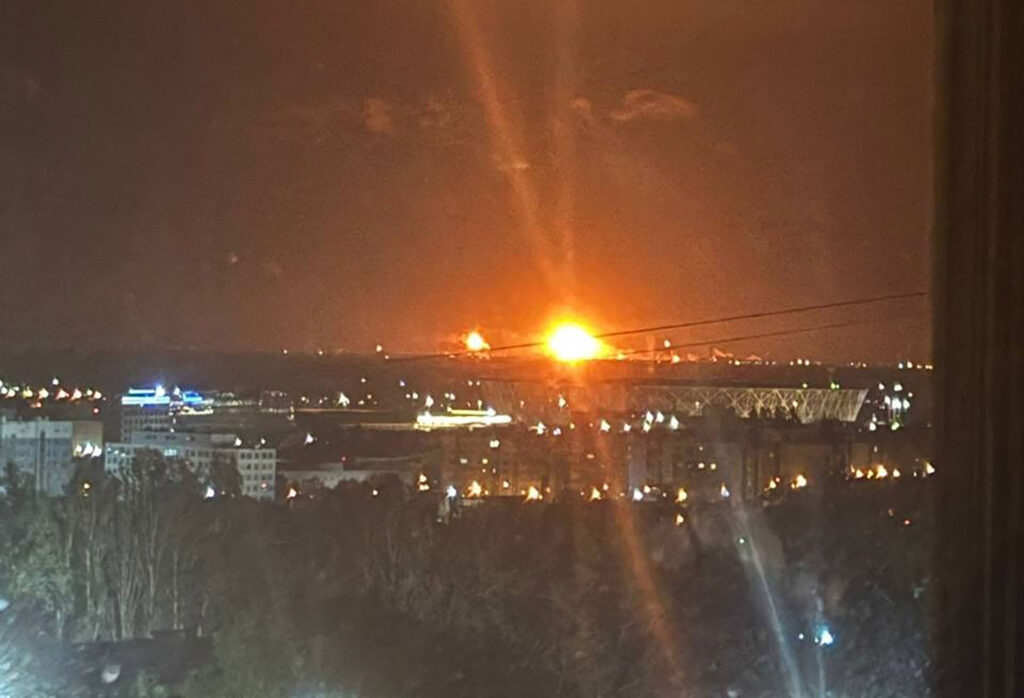
If Volgograd is offline for weeks, Russia must shift to secondary refineries in Ryazan and Tuapse — both farther from front-line demand and within range of Ukrainian missiles. This extends fuel convoy routes and increases vulnerability to interdiction. The cascade effect: if Russia pulls air defense from Donbas to protect energy infrastructure, Ukrainian artillery gains effective range in the Bakhmut-Mariupol sector.
This is the first time Ukraine has demonstrated the range and accuracy to force Russia into a logistics-versus-defense trade-off at scale.
Ukraine is now striking Russian energy infrastructure at 2,000 km range, exposing a critical gap in Russian air defense coverage over the interior.
This forces Russia to make a hard choice: either accept continued refinery attrition or redeploy air defense from the front lines to protect rear-area energy nodes — both outcomes degrade operational capacity. The Volgograd refinery is a primary source of military-grade fuel; sustained strikes here compress Russia's logistics timeline by forcing rationing or longer supply routes from the Caucasus.
Watch for Russian retaliation patterns — whether Moscow responds with deeper strikes on Ukrainian energy (tit-for-tat) or escalates against NATO territory (as occurred with the Romania drone strike on May 29, already reported).
What is the actual damage assessment on Volgograd — partial shutdown, full outage, or repairable damage? And did the Yaroslavl pipeline station suffer similar destruction, or was it a near-miss? The operational impact depends entirely on repair timelines.
Fault Lines
Strategic intelligence, synthesized daily — with a public track record. Every call graded against what actually happened.