Sea Machines STEAMRACER Advances to Navy MASC Final Evaluation Phase
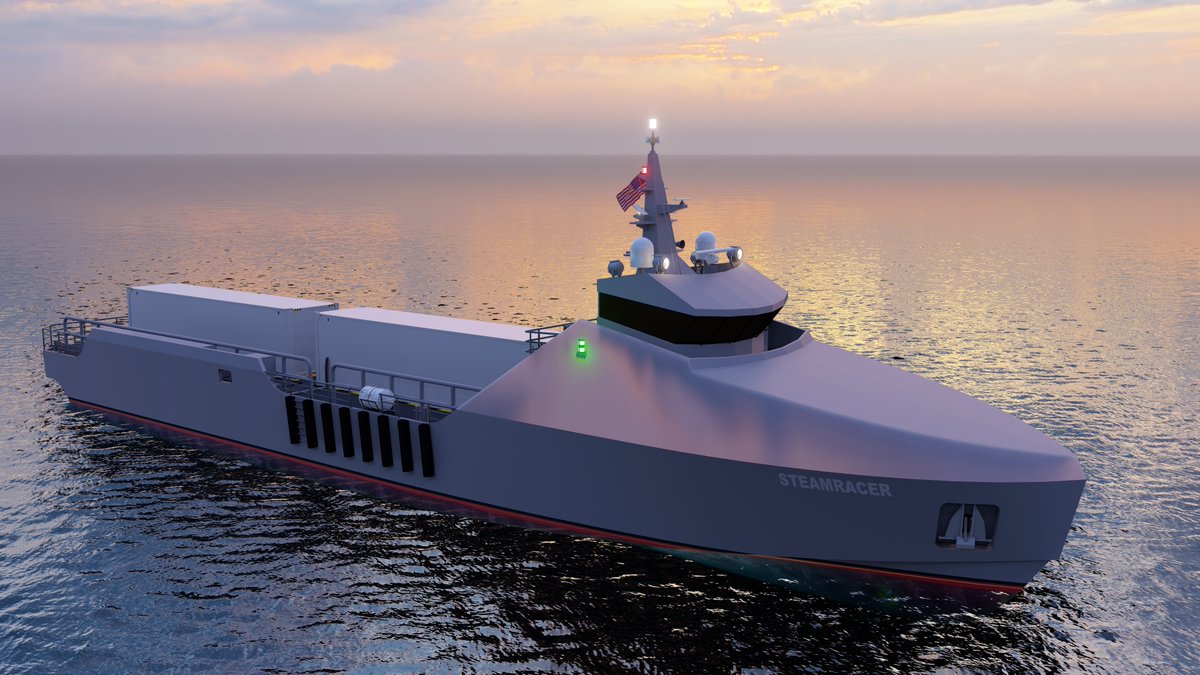
If STEAMRACER wins MASC, it validates the business model of autonomy specialists competing directly against defense primes in platform procurement—a shift that could accelerate Navy adoption of uncrewed surface vessels and fragment traditional surface combatant supply chains.
This would force Huntington Ingalls and General Dynamics to either acquire autonomy IP or accept lower margins on future surface ship contracts as autonomous alternatives commoditize certain mission sets.
MASC is a Navy priority for distributed lethality and crewed-uncrewed teaming in surface warfare.
If STEAMRACER wins, Sea Machines—a smaller autonomy specialist—becomes a prime contractor or major subcontractor on what could be a multi-billion-dollar platform production run, shifting competitive advantage away from traditional surface combatant primes (Huntington Ingalls, General Dynamics).
The final evaluation phase typically runs 12-24 months; contract award timing and production volume remain opaque from this announcement alone. This matters most to investors tracking autonomy-first naval architecture and to program managers assessing whether MASC will actually field autonomous hulls or remain a technology demonstrator.
The article does not identify competing designs, the Navy's evaluation criteria, expected contract award date, planned production quantities, or whether STEAMRACER is being pitched as a fully autonomous hull or a crewed variant with autonomous capabilities.
Fault Lines
Strategic intelligence, synthesized daily — with a public track record. Every call graded against what actually happened.