Greece Acquires Three C-390 Transports Using Portugal's Purchase Options
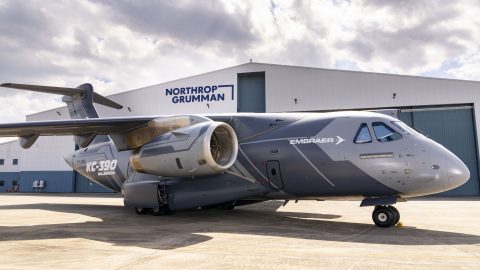
The C-390 is a secondary-tier strategic airlift platform — useful for NATO interoperability and regional logistics, but not a substitute for C-130J or A400M for contested environments. Greece's acquisition suggests NATO is treating the C-390 as a standardized medium-lift option for allied air forces that lack the budget for A400M or the political cover for sustained C-130J sustainment.
If Greece is the latest customer, expect Portugal, Spain, and possibly Czech Republic or Poland to follow. This spreads Embraer's production risk but also signals that NATO procurement is becoming more distributed — no single platform dominates, which complicates logistics and training but hedges against supply disruption.
Greece's procurement locks in industrial capacity for a platform that NATO and AUKUS allies are standardizing on for strategic airlift — but the real constraint is Portugal's willingness to cede its options rather than exercise them itself.
If Portugal is deferring its own C-390 deliveries to free capacity for Greece, that signals either a shift in Lisbon's airlift priorities or a quid pro quo in the NATO procurement ecosystem. Watch whether Portugal now pivots to a different transport platform (Airbus A400M acceleration, US C-130J sustainment) or whether this is a temporary defer-and-reorder play.
Did Portugal formally surrender its purchase options to Greece, or is this a lease/transfer arrangement that preserves Lisbon's future claim? And what did Greece offer in return — is there a linked procurement (air defense, naval systems) that made Athens an acceptable recipient?
Fault Lines
Strategic intelligence, synthesized daily — with a public track record. Every call graded against what actually happened.