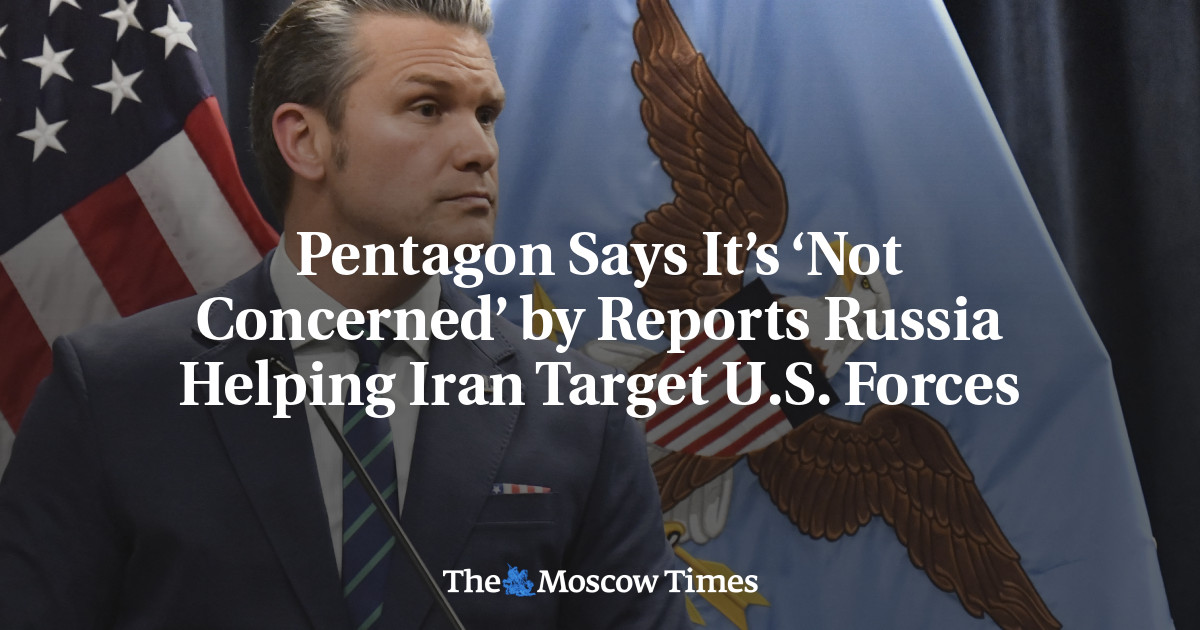
Pentagon Downplays Russian Targeting Support to Iran Amid Active Strikes
Russian targeting support, if confirmed and operationally significant, converts Iran's strike capacity from a degrading asset (as Israeli and U.S. air operations destroy launch platforms and depots) into a regenerating one sustained by external intelligence feeds.
This extends the operational timeline for U.S.-Israeli air campaigns and raises the cost-benefit calculation for ground operations in Lebanon or deeper strikes into Iranian territory.
It also creates a tripwire for NATO: if Russian signals intelligence or jamming directly enables Iranian strikes that kill U.S. or allied personnel, the threshold for treating Russian involvement as direct participation in the conflict moves closer.
If Russia is providing real-time targeting data or electronic warfare support to Iran, it materially changes the threat calculus for U.S. forces operating in the Gulf — not as a future risk, but as an active variable in the current conflict.
The Pentagon's dismissive public posture suggests either (a) the intelligence is being downplayed for diplomatic reasons, (b) the assistance is assessed as marginal to Iranian strike effectiveness, or (c) confidence in U.S. air defense and force protection is high enough that the threat is considered manageable.
The credibility of that assessment depends on whether the next Iranian strike wave shows improved targeting accuracy or coordination — a measurable indicator. What matters operationally: whether Russian support accelerates Iranian learning curves on U.S. force positioning or air defense patterns, potentially extending the conflict timeline.
The article does not specify what form the Russian assistance takes (signals intelligence, electronic warfare, targeting data, guidance systems, or other), what U.S. sources assessed as the evidence, when this assistance began, or whether it has materially improved Iranian strike accuracy or coordin...
Fault Lines
Strategic intelligence, synthesized daily — with a public track record. Every call graded against what actually happened.