Fincantieri Begins U212NFS Production; Italy Advances Next-Gen Sub Capability
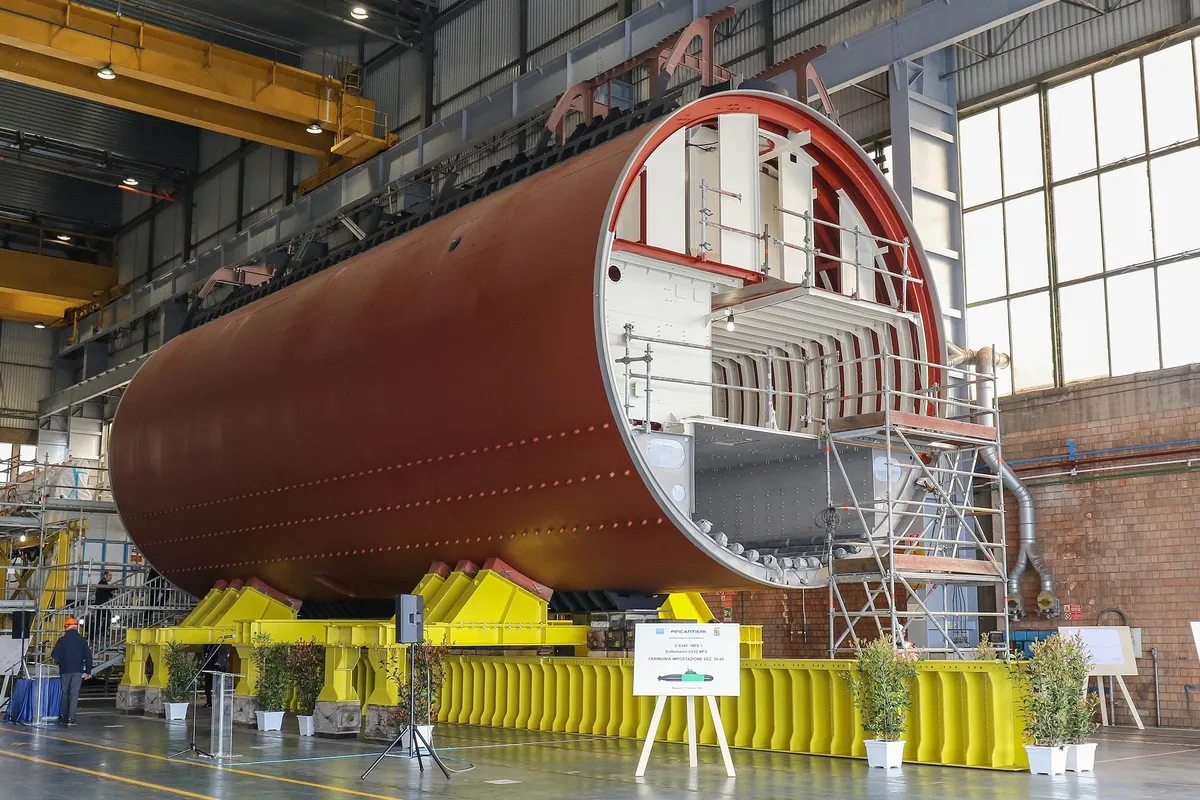
Italy's U212NFS order is a procurement signal within NATO's submarine modernization cycle, but it does not directly cascade into export controls, alliance friction, or industrial consolidation absent further orders from France, Germany, or Poland.
The keel-laying confirms Fincantieri's production capacity for a single four-boat program; whether this becomes a NATO-wide standard (forcing Thyssenkrupp into competition for additional slots) depends on adoption by other European navies—a decision point that lies outside this announcement.
This is a production milestone for a NATO ally's submarine modernization, confirming Italy's commitment to replace aging diesel-electric platforms with next-generation vessels.
However, the signal's relevance to defense investors and program managers is limited by the absence of critical data: no cost per unit, no delivery schedule, no technical differentiation from competing platforms (e.g., ThyssenKrupp's U212CD), and no indication of export potential. The keel-laying itself is a scheduling confirmation, not a market or capability shock.
Watch whether Italy's four-boat order catalyzes additional orders from other European navies or NATO members—that would signal export traction and industrial consolidation in European submarine production.
The article does not disclose the contract value, planned delivery dates, technical specifications relative to competitors, whether export variants are planned, or what percentage of the program is complete.
Fault Lines
Strategic intelligence, synthesized daily — with a public track record. Every call graded against what actually happened.