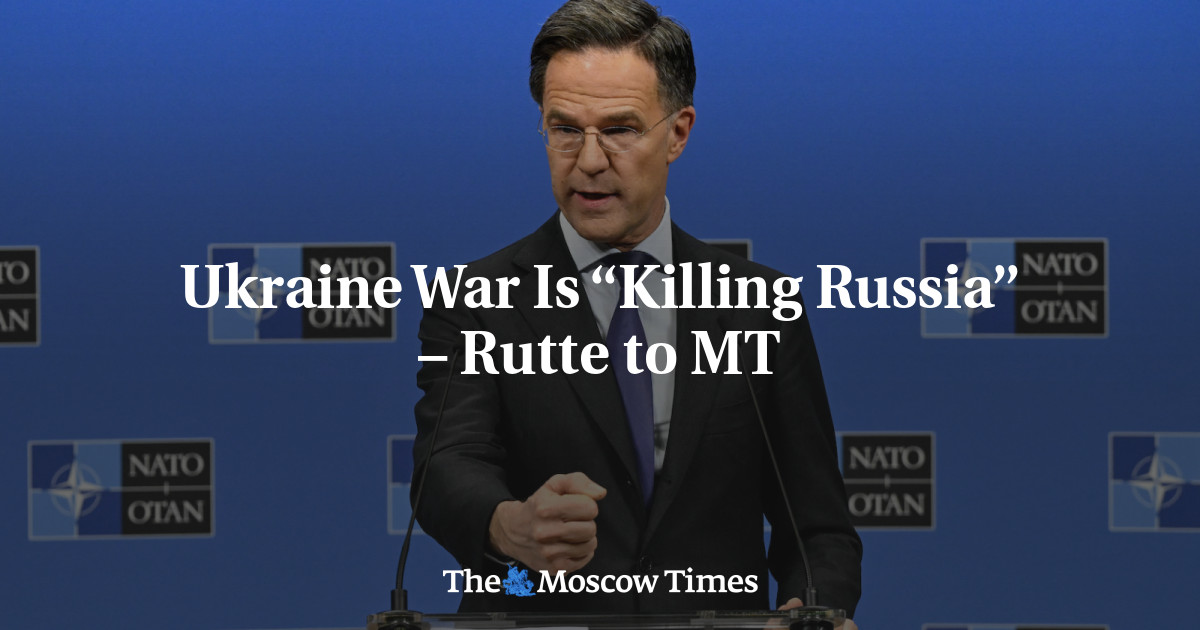
NATO: Russia sustaining 30k-35k monthly casualties in Ukraine
Power Projection: High attrition directly constrains Russian ability to sustain offensive operations and regenerate combat formations, affecting force design and readiness. If confirmed, this would indicate Russia faces a structural manpower bottleneck, forcing either deeper mobilization (domestic political risk) or reduced operational tempo.
Market Forces: Secondary — sustained casualties could drive Russian procurement of lower-cost substitutes or accelerate consumption of older equipment stocks, but the article provides no procurement data to trace this. Limited cross-pillar relevance without independent verification of the casualty figures and Russian replacement rates.
If sustained, monthly casualties at this scale (30k-35k) would impose severe manpower constraints on Russian force regeneration and create pressure on military-industrial capacity to replace equipment losses.
This directly affects Russian power projection capability in Ukraine and potentially elsewhere.
However, the signal depends entirely on verification: NATO casualty estimates have historically varied widely from Ukrainian and Russian figures, and the article provides no methodological transparency (killed vs. wounded vs. other losses), no comparison to Russian force size or replacement rates, and no breakdown by service branch.
Without knowing whether these are confirmed KIA, total combat losses, or estimates, the operational implication remains unclear. The claim merits tracking against independent sources (Ukrainian General Staff, U.S. intelligence assessments in Congressional testimony, open-source analysis) before informing force posture or procurement decisions.
The article does not specify: (1) whether these are killed-in-action, total casualties (KIA+WIA+MIA), or NATO estimates; (2) the source or methodology behind NATO's figures; (3) how these rates compare to Russian monthly replacement/mobilization capacity; (4) whether losses are distributed across fr...
Fault Lines
Strategic intelligence, synthesized daily — with a public track record. Every call graded against what actually happened.