Rubio Projects 2-4 Week War Duration; White House Pursues Unilateral Objectives Without NATO Consensus
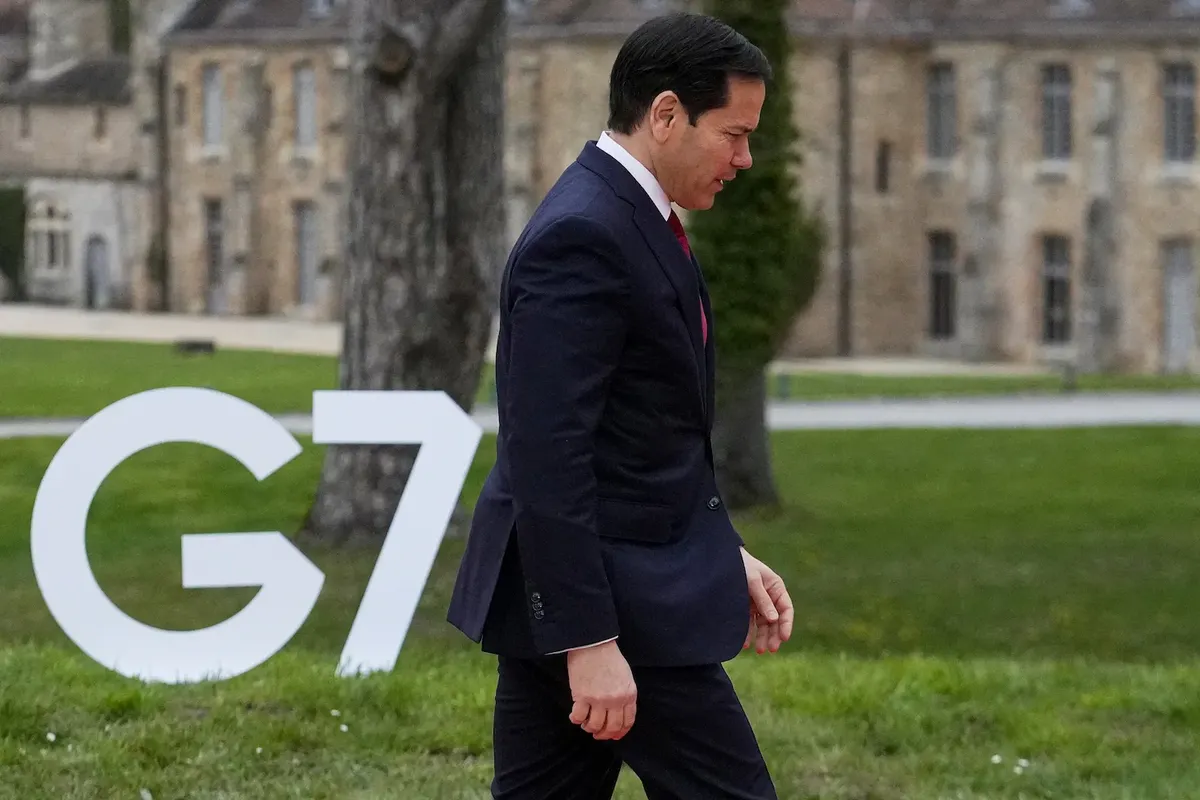
Rubio's unilateral posture and 2-4 week projection directly constrains allied procurement decisions and extends U.S. solo burden-bearing. NATO absence from strategy means European allies (UK, France, Germany) are not coordinating air defense, logistics, or follow-on strikes, forcing U.S.
Central Command to plan for sustained operations without allied force multipliers — this extends the demand signal for U.S. munitions, ISR, and air-to-air refueling beyond the April 6 checkpoint and increases pressure on sustainment contracts for carrier air wings and bomber rotations.
Rubio's timeline projects conflict duration into mid-to-late April, overlapping with Trump's April 6 deadline for Iranian power plant strikes and creating a window where escalation can continue under the guise of pursuing stated objectives.
The explicit acknowledgment of NATO absence from strategy signals the U.S. is accepting allied diplomatic disengagement and pursuing a unilateral conclusion — a posture that increases the risk of overreach (e.g., strikes on Iranian energy infrastructure on April 6) and reduces allied pressure for off-ramps.
For defense primes, this extends the active-ops demand signal for air defense systems, munitions replenishment, and Middle East surge capacity through mid-April minimum; for program managers, it confirms sustained wartime production tempo (DoD-Lockheed PrSM acceleration announced March 25 remains in effect).
The absence of allied buy-in also signals that post-conflict reconstruction, regional stabilization, and cost-sharing will fall disproportionately to the U.S., increasing long-term fiscal exposure.
The article does not specify what 'all war objectives' entails — whether that includes regime change, Iranian nuclear capability elimination, or simply degradation of current military capacity.
Fault Lines
Strategic intelligence, synthesized daily — with a public track record. Every call graded against what actually happened.