Saudi Nuclear Independence Decouples from Iran War; US Guarantees No Longer Binding Constraint
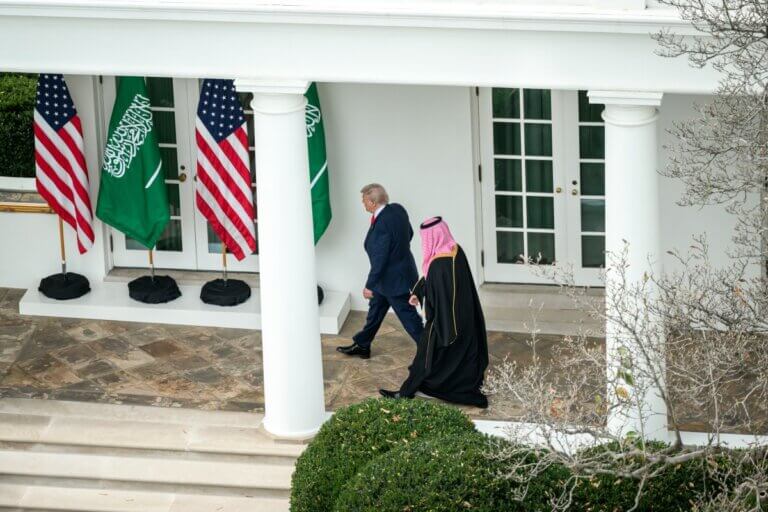
Saudi nuclear independence during active conflict collapses the US-Gulf deterrence architecture that has anchored Middle East power projection for 40 years.
If Saudi Arabia no longer believes US security guarantees are credible (a reasonable inference given the current Iran strikes and Trump's conditional ceasefire diplomacy), then US ability to enforce regional stability through extended deterrence erodes regardless of military victory against Iran.
This forces a recalibration: either the US must rebuild Gulf confidence through binding security commitments (requiring Congress to authorize new defense treaties), or it accepts a multipolar Gulf where Saudi, UAE, and Israel pursue independent nuclear/drone/air capabilities, fragmenting US command and control over regional escalation.
This represents a structural shift in Gulf nuclear proliferation dynamics.
If Saudi Arabia commits to an indigenous nuclear program during active US-Iran conflict—when US military presence and guarantees are theoretically at their strongest—it signals permanent loss of confidence in extended deterrence.
This accelerates a two-track proliferation: Iran under sanctions pursuing weapons capability, Saudi Arabia pursuing civilian-to-weapons-capable infrastructure, both decoupled from US leverage.
The immediate risk is that a US-Iran ceasefire or negotiated settlement (Iran's March 25 counterproposal demands reparations and Hormuz control) will not reverse Saudi nuclear momentum, since the decision is now driven by capability hedging rather than threat response.
Defense primes (Westinghouse, GE Hitachi, Rolls-Royce) and US export control agencies face a 12-24 month window to shape Saudi nuclear supply chains before Saudi Arabia locks in alternative suppliers (Russia, China, France) to avoid US conditionality.
The article does not specify whether Saudi Arabia has already initiated procurement discussions with non-US suppliers, whether the Saudi government has formally approved a nuclear development timeline, or whether this Stimson analysis reflects Saudi official statements or external inference.
Fault Lines
Strategic intelligence, synthesized daily — with a public track record. Every call graded against what actually happened.