BAE Systems Tests Low-Cost Counter-Drone Pod for Typhoon Amid Iran Escalation
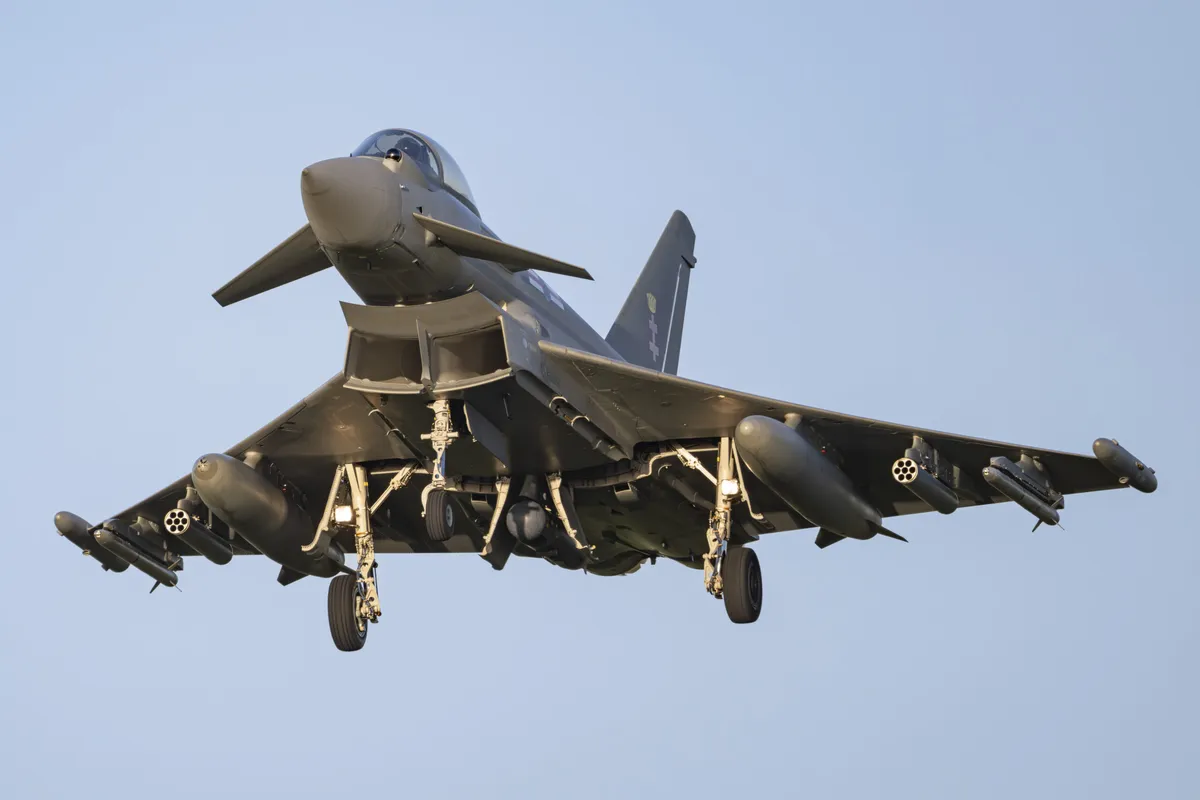
BAE's counter-drone pod development directly addresses a capability gap exposed during the April 6-8 Iran escalation: allied air defenses lacked affordable options to defeat drone swarms without deploying expensive air-to-air missiles (THAAD, Patriot).
If Typhoon operators adopt this solution, it reduces their dependence on Raytheon THAAD seeker production (which BAE itself just expanded under a separate April 8 contract) and creates a lower-cost tier for distributed air defense — enabling more allied squadrons to field counter-drone capability without waiting for US-supplied systems.
The timing is operationally relevant: European air forces operating Typhoons (UK, Germany, Italy, Spain) now have a tested, low-cost drone-defeat option as Iranian and proxy drone threats persist across the Middle East and Eastern Europe.
BAE's internal funding suggests customer demand is sufficient to justify R&D without contractual commitment — a signal that allied air forces view counter-drone capability as urgent rather than developmental. However, the article provides no technical details (range, cost, integration timeline, or testing scope), leaving open whether this is a retrofit for existing fleets or a requirement for future Typhoon variants.
The absence of a named customer or production contract means this remains a demonstration, not a procurement signal.
What is the estimated unit cost, effective range, and integration timeline for operational aircraft? Which Typhoon operators requested this capability, and does it address a specific threat (Iranian drones, Houthi threats, Russian loitering munitions) or a general requirement?
Fault Lines
Strategic intelligence, synthesized daily — with a public track record. Every call graded against what actually happened.