USAF Deploys 21 B-1B Bombers to UK as Sustained Iran Campaign Infrastructure Solidifies
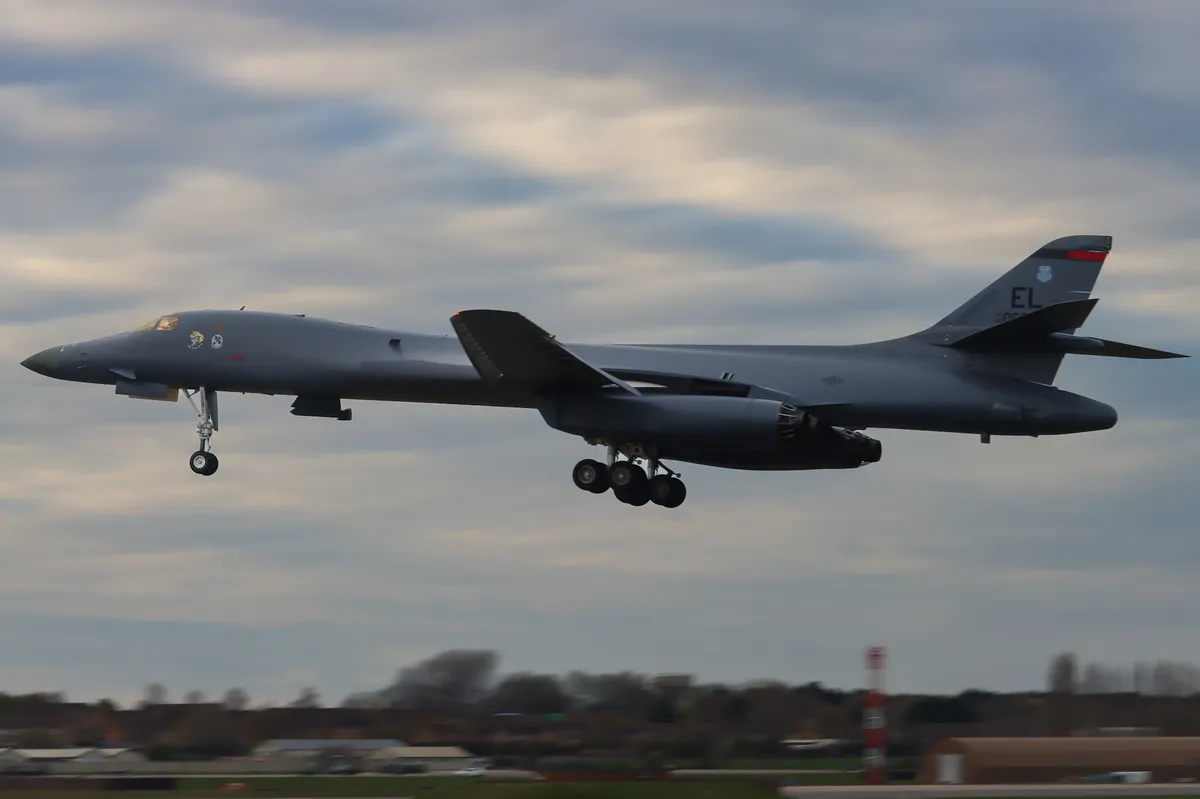
B-1 basing at RAF Fairford directly enables the sustained strike tempo against Iranian targets that has continued through Trump's April 6 deadline extension. The 21-aircraft inventory removes the logistics constraint that would otherwise limit strike frequency — each aircraft can execute 2-3 sorties per day when fully supported.
This locks in Power Projection capacity and forces a Market Forces consequence: sustained munitions consumption will accelerate PrSM, JASSM, and standoff cruise missile production commitments, with Lockheed Martin and Raytheon positioned to fulfill wartime-tempo contracts already initiated on March 25.
The 21-aircraft inventory represents a shift from temporary surge posture to institutionalized wartime basing.
B-1Bs are the primary platform for sustained standoff strike campaigns — the scale here (21 airframes) signals expectation of extended operations beyond the April 6 Trump deadline. This ties directly to the 50,000+ US troops already deployed to the region and the DoD-Lockheed acceleration of PrSM production to wartime tempo.
For defense contractors, sustained basing typically precedes multi-month sustainment contracts, spare parts orders, and logistics base expansion. RAF Fairford will require dedicated munitions storage, maintenance personnel, and fuel infrastructure — all signals that procurement officers should expect follow-on contracts for base support and ammunition supply.
The article does not specify: (1) whether this represents the full intended deployment or if additional aircraft are planned; (2) the expected duration of the deployment; (3) whether this is replacing rotational deployments or adding to baseline posture; (4) munitions stockpile levels or sustainment...
Fault Lines
Strategic intelligence, synthesized daily — with a public track record. Every call graded against what actually happened.