Pentagon E-7 Wedgetail Cancellation Blocked; FY27 Budget Remains Battleground
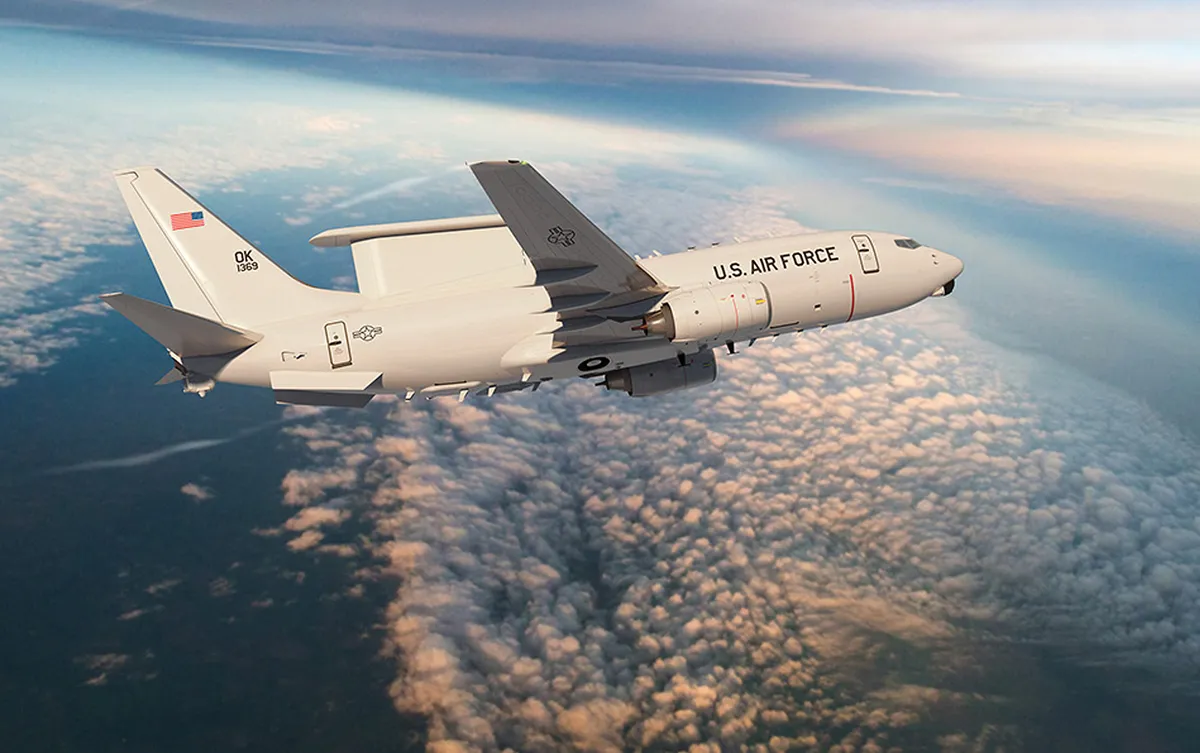
The E-7 budget fight is a proxy for whether Congress or the Pentagon controls legacy platform lifecycles.
If Congress sustains protection for the E-7 through FY27, it establishes precedent that industrial base and allied interoperability considerations can override executive efficiency judgments—a constraint that applies equally to other legacy platforms (P-8, KC-135, E-3) and limits the Air Force's ability to reprogram funds toward peer-competition modernization.
Congress has now twice resisted Pentagon efforts to terminate the E-7—first blocking the 2026 cancellation, now prompting Meink's hedged language about 'discussions' rather than acceptance.
This signals the program has legislative protection that survives executive preference, likely driven by industrial base or allied interoperability concerns (the E-7 is a Boeing platform built on the P-8 airframe, with Australia as the lead operator).
The real decision point is FY27: if DoD resubmits a cancellation request and Congress blocks it again, the program becomes de facto protected, forcing the Air Force to absorb what it views as unnecessary legacy capability. If DoD drops the issue, the E-7 survives but consumes budget space the Air Force would allocate to NGAD or next-generation AEW&C concepts.
Either outcome constrains near-term modernization trade-space.
The article does not specify why Congress blocked the cancellation (industrial base preservation, allied commitments to Australia, or institutional inertia) or whether Meink's 'discussion' language reflects genuine openness to E-7 retention or a rhetorical prelude to a second cancellation attempt.
Fault Lines
Strategic intelligence, synthesized daily — with a public track record. Every call graded against what actually happened.