Iranian Missile Volleys Decline to 24-Hour Low; Hegseth Avoids Ground Invasion Timeline
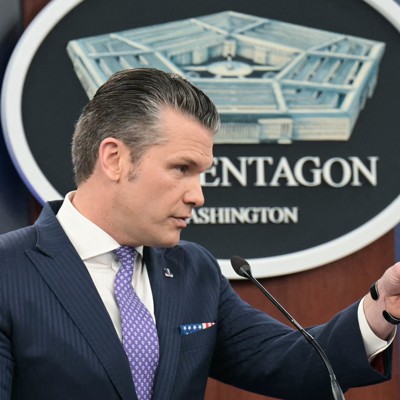
Hegseth's refusal to commit on ground operation timing preserves the ambiguity that allows Trump to negotiate from a position of demonstrated air superiority without signaling whether the next phase is invasion, occupation, or regime change via air campaign alone.
If the pause reflects Iranian ammunition depletion rather than a deliberate stand-down, the US can sustain air operations indefinitely; if it reflects Iranian decision to shift to maritime and infrastructure targeting (already evidenced by the Al-Salmi tanker strike and Haifa refinery hit), the campaign enters a new cost-imposition phase where energy market volatility and shipping insurance replace kinetic attrition as the mechanism of coercion.
The reported decline in Iranian fire tempo suggests either Iranian air defense attrition, ammunition constraints, or a deliberate pause—but without metrics on prior daily volleys, the claim is uncontextualized and does not establish whether Iran is degrading, regrouping, or shifting to asymmetric targeting (maritime, infrastructure).
The refusal to discuss ground deployment intent is the material fact: it preserves ambiguity that keeps Iranian decision-makers guessing about escalation ceiling and may indicate internal disagreement within the Trump administration on whether to pursue regime change kinetically or negotiate from current strike position.
Contractors supplying sustained air operations (Raytheon Missiles & Fire Control, Lockheed rotary-wing logistics) benefit from extended campaign duration; those with ground-combat exposure (General Dynamics, L3Harris tactical systems) face margin pressure if operations stall without commitment.
The article does not provide baseline daily Iranian sortie/volley counts from prior days, making 'lowest number' impossible to evaluate as tactical significance vs. noise.
Fault Lines
Strategic intelligence, synthesized daily — with a public track record. Every call graded against what actually happened.