Trump Ban on Anthropic Tech Blocks AI Firm from U.S. Government Contracts
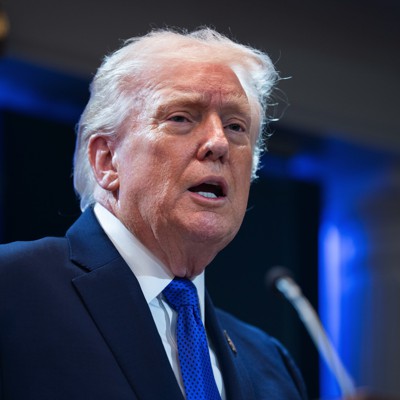
This procurement exclusion forces agencies and defense contractors currently integrated with Anthropic's models to either migrate to alternative LLM providers (OpenAI, Meta, or proprietary systems) or accept capability gaps during transition—a substitution cost that will appear in FY27 reprogramming requests and vendor protests.
The ban also creates a market advantage for AI firms willing to accept government demands for surveillance and autonomous weapon integration, shifting competitive dynamics in the defense-AI sector away from ethical-constraint vendors and toward those with fewer public refusals.
This order severs Anthropic from federal procurement channels—a material loss for any defense-adjacent AI vendor, though the actual dollar exposure depends on which agencies and programs currently use Anthropic's models (the article does not specify).
The ban signals executive willingness to weaponize procurement policy against vendors who refuse certain dual-use capabilities, which may influence how other AI firms (OpenAI, Palantir, Scale AI) calibrate their own government engagement and ethical guardrails.
The decision also exposes a real constraint in the current defense-AI supply chain: no clear mechanism exists to rapidly replace Anthropic's architecture across government systems, meaning agencies may face temporary capability gaps or forced migration costs.
Whether this holds or faces legal challenge hinges on the formal authority cited—if based on executive order rather than statute, it remains vulnerable to litigation or reversal.
The article does not identify which federal agencies or specific programs currently rely on Anthropic technology, making it impossible to quantify the operational or budgetary impact.
Fault Lines
Strategic intelligence, synthesized daily — with a public track record. Every call graded against what actually happened.