Iranian Missile Strike on Dimona Nuclear Facility Injures 30+ as Retaliation Cycle Intensifies
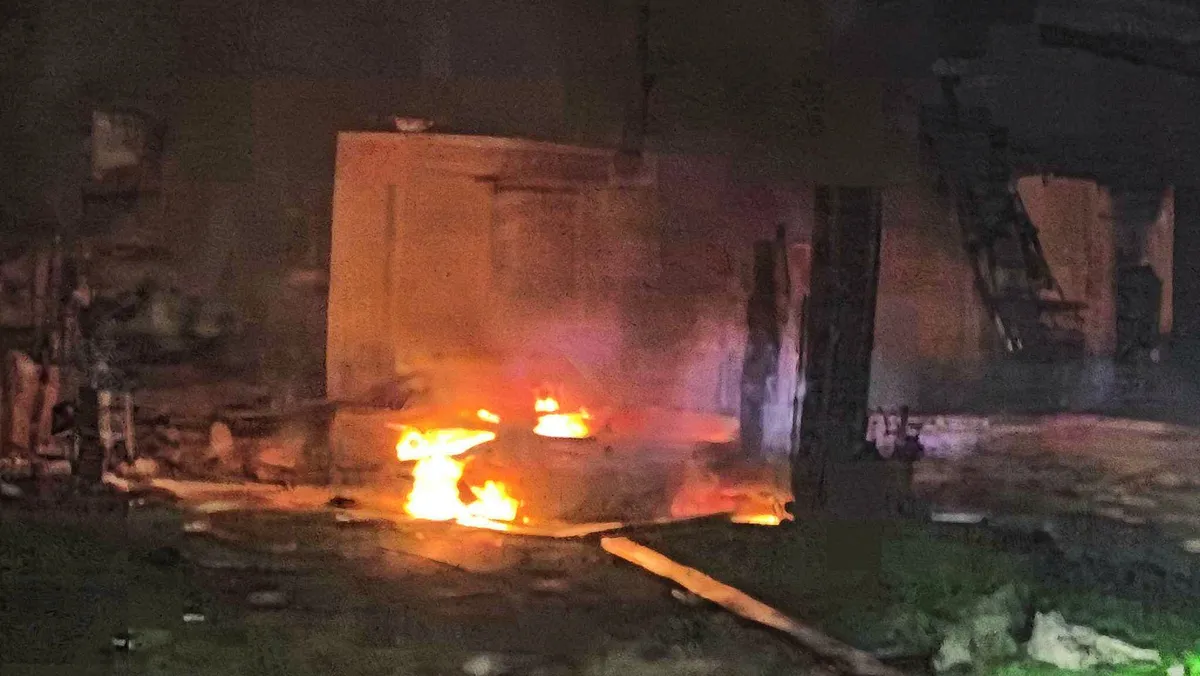
Nuclear facility strikes compress decision timelines for Israeli retaliation in ways conventional strikes do not. If Dimona sustained operational damage, Israel's nuclear deterrent posture enters the calculation — forcing a response that could include strikes on Iranian nuclear sites (Natanz was already struck on March 21, per prior signals) or escalation beyond the current air campaign.
This converts a regional air war into a nuclear-adjacent conflict, which alters US commitment calculus: Diego Garcia and other forward bases now face ballistic missile targeting, and the cost of sustained operations rises. Simultaneously, any radiological incident would activate international pressure (IAEA, UN Security Council) that could constrain rather than enable further Israeli strikes.
A strike on Dimona introduces nuclear facility targeting into an active conflict that has already expanded to energy infrastructure (Ras Laffan LNG), military bases (Diego Garcia), and population centers.
If the facility sustained damage to containment or fuel storage, radiological release risk exists — though the source does not confirm structural damage or operational impact. This escalates Iran's targeting doctrine from conventional military and energy targets to dual-use nuclear assets, raising the threshold for Israeli and US retaliation.
The casualty count (30+) is significant but secondary to the facility type: any confirmed damage to nuclear operations would force IAEA notification and could trigger automatic escalation protocols embedded in US-Israel contingency planning. The immediate question is whether this strike succeeded in degrading Dimona's operational capacity or merely struck perimeter infrastructure.
The article does not specify what was struck at Dimona (reactor, fuel storage, air defense, perimeter), whether operational capability was degraded, or whether any radiological release occurred. Without damage assessment, the strategic consequence remains unclear.
Fault Lines
Strategic intelligence, synthesized daily — with a public track record. Every call graded against what actually happened.