OPEC+ Output Boost Amid Iran Escalation Tightens Oil Supply Hedging for Defense Programs
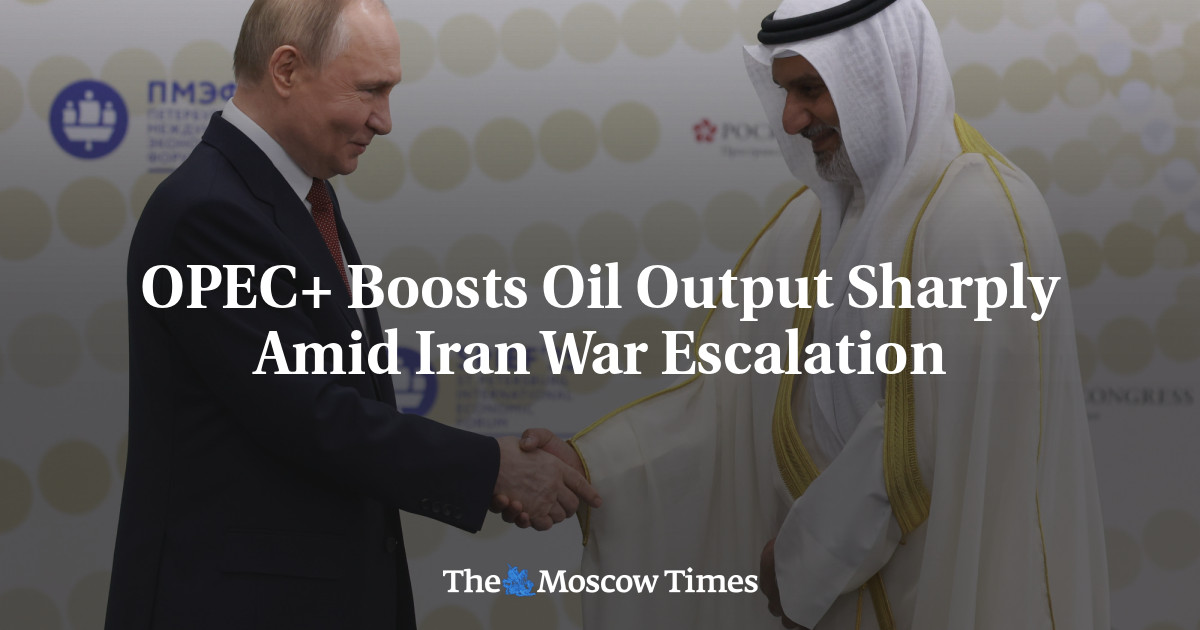
If OPEC+ is deliberately increasing output to suppress oil prices during geopolitical escalation, it suggests Russia and Saudi Arabia are prioritizing market stability over revenue extraction — a calculation that only holds if both assess Iran escalation as unlikely to spread into Gulf shipping lanes.
A sustained price floor below $75/bbl reduces pressure on allied defense budgets to reallocate fuel contingencies, but also signals that major producers do not expect supply disruption. If Iran retaliates against Saudi or UAE infrastructure, this production increase becomes stranded capacity and credibility damage for OPEC+, forcing a sharp reversal that would spike prices and compress defense logistics margins.
Defense contractors and program managers hedge fuel costs across operations and logistics.
A 206,000 bpd increase is marginal relative to global demand (~100 mbd) and unlikely to materially shift energy markets or defense fuel budgets. However, the framing — that OPEC+ is *boosting* output *during* Iran escalation — contradicts the typical pattern where geopolitical risk drives supply cuts and price spikes.
If this reflects Russian-Saudi coordination to stabilize prices despite conflict, it signals confidence that Iran escalation remains contained. If the increase fails to materialize or reverses, it would indicate OPEC+ fragmentation. The signal's value depends on confirmation from primary OPEC+ statements, which this article does not cite.
The article does not specify which OPEC+ members agreed, whether the increase is voluntary or mandated, the basis for the 206,000 bpd figure, or whether this is a reversal of prior production cuts. No direct quotes from OPEC+ or member governments are provided.
Fault Lines
Strategic intelligence, synthesized daily — with a public track record. Every call graded against what actually happened.