Air Defense Attrition Accelerates Munitions Consumption in Active Campaign; Inventory Constraints Emerge
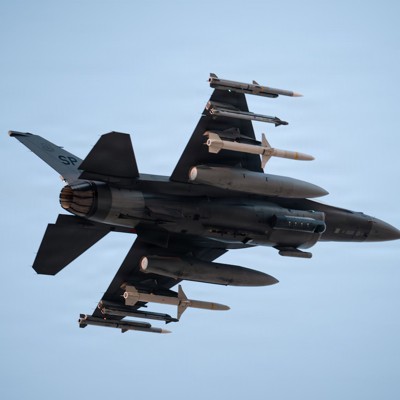
Munitions depletion during active combat directly constrains Power Projection duration. If air defense rounds become scarce before Iran's strike capacity is degraded, campaign planners must either accept higher attrition on defended assets, request emergency production increases (which compress margins at primes and delay other contracts), or curtail offensive operations to preserve defensive inventory.
This creates a procurement feedback loop: sustained combat reveals that peacetime production rates were insufficient, forcing emergency buys that compete with other FY26-27 programs for production slots and working capital.
The article identifies a real constraint in the ongoing Iran campaign: sustained air defense operations burn through inventory faster than peacetime procurement replaces it.
If engagement rates remain elevated (Iran has launched 28 documented strike waves in 72 hours per prior signals), air defense munitions depletion becomes a limiting factor on campaign duration and intensity. The reliance on 'cheap munitions' and Ukrainian supply suggests existing inventory margins are tight enough that allied sources are being tapped.
For defense contractors supplying air defense rounds (Raytheon, Northrop GD on Patriot/THAAD/C-RAM), this creates short-term demand but also signals that current production rates were not sized for this operational tempo. The strategic implication: if munitions become the binding constraint before Iran's strike capacity is exhausted, the campaign's duration is determined by logistics, not military capability.
The article does not specify which air defense systems are consuming munitions at the highest rate, total rounds expended to date, current inventory levels for any system, or the timeline for resupply from production.
Fault Lines
Strategic intelligence, synthesized daily — with a public track record. Every call graded against what actually happened.