Ukraine Integrates AI into Long-Range Drone Strikes to Navigate GPS-Denied Environments
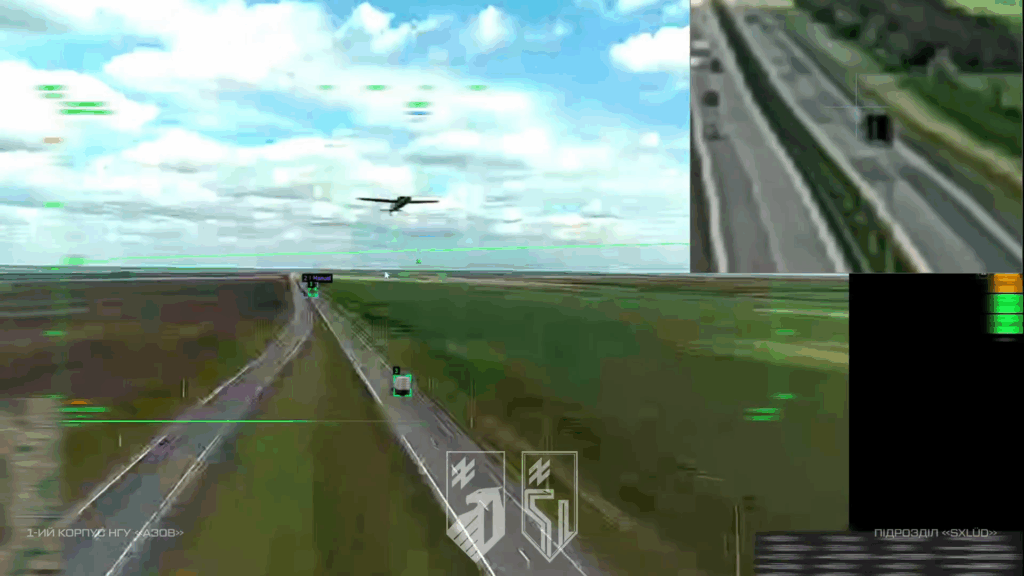
If Ukraine's AI navigation holds up under sustained Russian EW pressure, it creates a template for NATO air forces operating in a contested spectrum. The second-order effect: Raytheon and Northrop's JDAM-ER and AGM-158 JASSM guidance packages will face immediate pressure to demonstrate equivalent autonomous fallback modes — not just INS/GPS fusion, but true AI-driven re-targeting.
That work is not in the current FYDP for either program. More immediately, if Russian forces can't jam Ukraine's drones effectively anymore, they lose one of their primary defenses against standoff strikes, which forces a shift to air defense density or dispersal of logistics — both expensive and tactically constraining.
Ukraine has solved a critical targeting problem that has constrained its ability to strike deep into Russian rear areas — GPS denial and EW jamming.
This matters to INDOPACOM and NATO because it demonstrates that autonomous navigation and targeting can function in a contested electromagnetic environment, which directly applies to Taiwan contingency planning and Baltic operations where Russian and Chinese jamming density is similarly high. The timeline is now: Ukraine is operationalizing this capability in active combat, not in test beds.
Watch whether this AI-guided approach shows up in Ukrainian strike patterns against Russian logistics nodes in Belarus or rear-area command posts — that will confirm operational maturity.
What is the actual AI architecture — onboard processing, edge computing, or a hybrid model? And has Ukraine demonstrated this against defended targets, or only in permissive environments where jamming is sporadic?
Fault Lines
Strategic intelligence, synthesized daily — with a public track record. Every call graded against what actually happened.