Pentagon Embeds UAS Training in Basic Training, Expanding Pilot Pool Beyond Specialist Roles
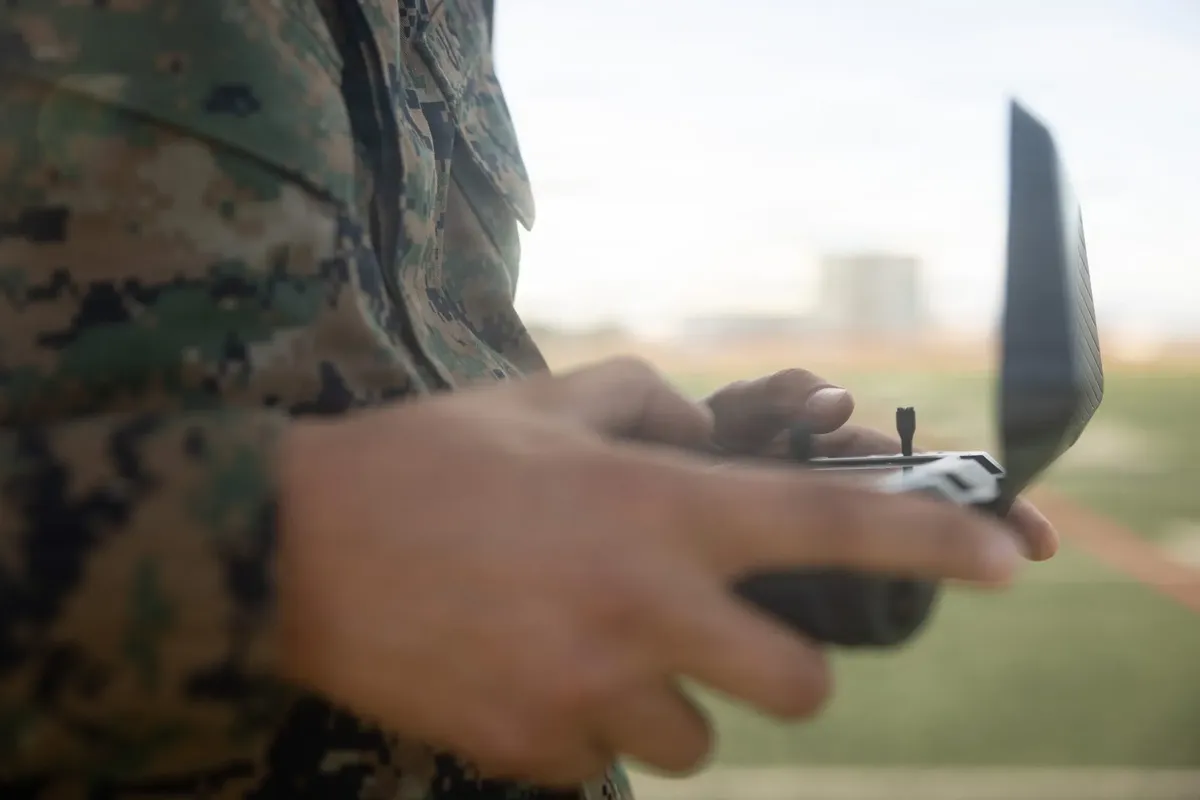
Embedding UAS literacy into basic training pipelines increases the baseline operator pool available for small-unit deployments, which directly expands the constraint on small-UAS procurement timelines—if trained personnel were the bottleneck, accelerating their production reduces procurement lead-time pressure on manufacturers like Teledyne FLIR, AeroVironment, and Parrot.
Conversely, if training infrastructure becomes saturated, it may delay fielding of new small-UAS platforms to operational units, creating a secondary constraint that manifests in FY27-28 procurement deferrals.
This signals intent to distribute UAS competency across the enlisted force rather than concentrate it in specialist billets—a workforce design choice that reduces single-point-of-failure risk in small-unit operations and increases the pool of personnel capable of fielding tactical drones.
The cost implication depends on training burden: if embedded into existing basic training curricula, marginal cost is low and adoption scales quickly; if delivered as separate advanced training, it competes for training command capacity and may slow other skill development.
The lack of specifics on which services, how many recruits, and what training hours are required makes it impossible to assess whether this is a pilot program (low consequence) or a force-wide transition (material impact on training infrastructure and contractor support).
Watch for whether this training becomes a gating requirement for advancement or remains optional—that determines whether it reshapes career progression or remains peripheral.
The article does not specify which services are implementing this, how many recruits are affected, what training hours or curriculum changes are required, whether this is pilot or enterprise-wide, or whether completion is mandatory for advancement or optional.
Fault Lines
Strategic intelligence, synthesized daily — with a public track record. Every call graded against what actually happened.