Lockheed Exits Navy Trainer Competition; Field Narrows to SNC, Boeing, Textron-Leonardo
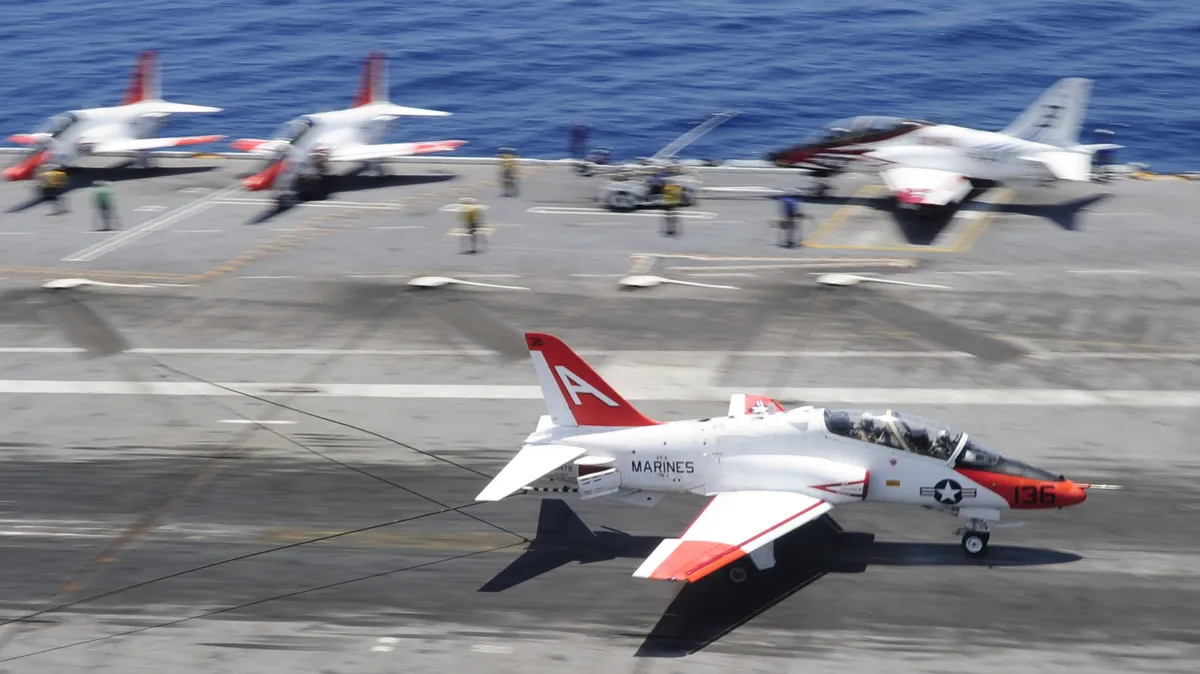
Trainer aircraft procurement is typically a 30+ year platform lifecycle (aircraft + spares + support). A reduced bidder pool increases the winner's pricing power in Lot 2 and Lot 3 production, compressing margins for the loser and reducing long-term sustainment competition.
If SNC wins, they gain a new revenue stream to offset their dependence on Space Force contracts; if Textron-Leonardo wins, it anchors Leonardo's U.S. industrial footprint and creates a rationale for increased domestic manufacturing of trainer airframes.
Either outcome shifts the competitive balance in the military aviation supply chain away from traditional primes (Lockheed, Northrop) toward mid-tier and international partners.
Lockheed's withdrawal reduces competition in a fixed-price, high-volume production contract.
With three bidders remaining, pricing pressure eases — the winner will face less aggressive cost-cutting incentive than in a four-way race. SNC and Textron-Leonardo now have clearer paths to capture a multi-decade trainer fleet modernization worth billions in sustainment revenue.
Boeing's position is unclear; the company has struggled on fixed-price development contracts recently (KC-46A, MQ-25), making this exit potentially strategic to avoid another margin-compression program. The real question is whether Lockheed's withdrawal signals cost-competitiveness problems with their design or reflects a portfolio decision to focus capital elsewhere.
Did Lockheed withdraw voluntarily due to cost or technical concerns with their design, or did Navy feedback indicate they were not competitive? The answer determines whether the remaining field is genuinely competitive or whether one of the three is already favored.
Fault Lines
Strategic intelligence, synthesized daily — with a public track record. Every call graded against what actually happened.