South Korea Clears 24 MH-60R Helicopters; ASW Capability Surge Amid Hormuz Escort Rotation
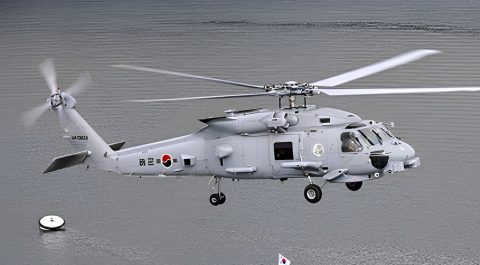
The approval removes a constraint on South Korean naval modernization that has been binding since the 2022 Hormuz escort commitment. If Seoul receives the helicopters on a 18-24 month delivery cadence (standard for Sikorsky FMS), the first airframes arrive in late 2027 — precisely when the U.S. Navy faces its own ASW gap from the Hormuz rotation.
This creates a de facto burden-sharing mechanism: Seoul absorbs responsibility for Korean waters and Yellow Sea ASW, freeing U.S. Navy assets for the Taiwan Strait and Indian Ocean. South Korea's defense ministry gets what it wanted (organic capability), and INDOPACOM gets what it needs (one fewer allied demand on a constrained helicopter fleet).
South Korea is backfilling ASW capacity while the U.S.
Navy rotates assets to the Hormuz escort mission. The 24 airframes represent 3-4 years of Seoul's planned maritime helicopter procurement — this clears the pipeline for immediate contracting and accelerates South Korean frigate and destroyer deployments that depend on organic ASW coverage.
With INDOPACOM stretched across the Hormuz coalition and Taiwan contingency posture, Seoul's self-sufficiency in submarine detection directly reduces demand on U.S. Navy P-8A and helicopter assets in the Western Pacific. Watch the FMS contract signature timeline — if Seoul accelerates payment to FY26 or FY27, it signals confidence in the Hormuz commitment holding through 2028.
What is the estimated unit cost per airframe in this FMS, and does Seoul plan to integrate these into existing 054A-class frigate operations or reserve them for new Daegu-class destroyers under construction?
Fault Lines
Strategic intelligence, synthesized daily — with a public track record. Every call graded against what actually happened.