Air Force Blocks Boeing KC-46 Contract Until Tanker Deficiencies Resolved
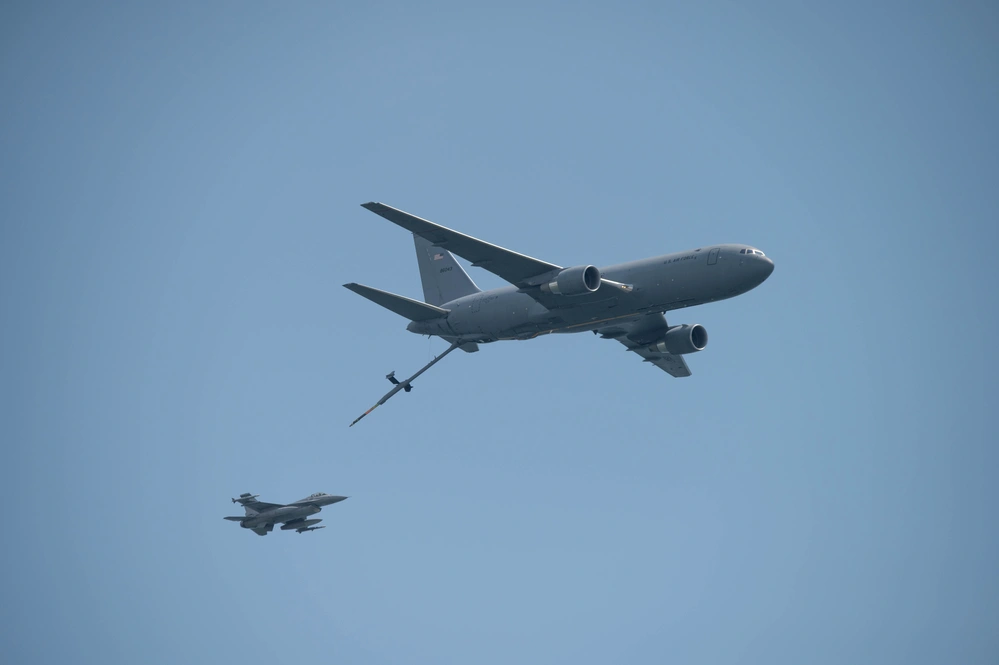
The tanker shortage directly constrains the air campaign already underway against Iran. Each KC-46 delayed is a sortie that cannot be launched from forward bases — this translates into longer dwell times for strike packages, reduced loiter time over target, and increased reliance on in-theater pre-positioning.
If the deficiency resolution extends into summer 2026 and concurrent operations in Lebanon intensify (per the March 6 IDF ground offensive signal), the Air Force will be forced to either reduce daily strike tempo or cannibalize aircraft from other commands, weakening Pacific Air Forces readiness for China contingencies.
This delays the only major tanker recapitalization program in the US inventory at a moment when sustained air operations over Iran and the Levant are consuming fuel at rates that stress existing KC-135 and KC-10 fleets.
If deficiency resolution extends beyond Q3 2026, the Air Force will lack surge capacity for concurrent operations in the Middle East and Indo-Pacific — a constraint that directly impacts sortie generation rates for both Israel-support missions and potential Taiwan contingency planning.
Boeing's failure to deliver a defect-free platform also opens the door for alternative tanker architectures (commercial leasing, A330 MRTT variants) to be evaluated, which would fragment the industrial base and delay full fleet modernization by 3-5 years.
The article does not specify which deficiencies are blocking the contract or what timeline the Air Force has set for their resolution.
Fault Lines
Strategic intelligence, synthesized daily — with a public track record. Every call graded against what actually happened.