Missile Makers Commit to Quadrupled Production; Trump Cites White House Pressure Campaign
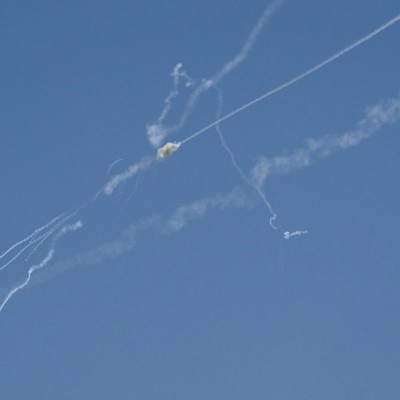
If the commitment covers air-to-surface cruise missiles (Tomahawk, JASSM) or air defense interceptors (SM-6, AMRAAM), a sustained 4x production rate would enable the US to sustain offensive and defensive operations against Iran without inventory depletion, removing a constraint on the duration of the current conflict.
Conversely, if the commitment is to lower-volume platforms or lacks binding procurement orders, it is rhetorical cover for inventory drawdown and signals that the US expects the current phase of operations to conclude before production ramps materially.
Either way, production capacity now becomes a visible measure of US commitment to the conflict—allies and adversaries will track whether actual deliveries match the 4x claim.
If confirmed and binding, this represents a direct supply-side response to six days of active US-Israeli combat operations against Iran (March 1–7, 2026) that have consumed air-to-surface missiles, cruise missiles, and air defense interceptors at rates that deplete existing inventories faster than peacetime production can replace them.
The credibility of this commitment depends entirely on which systems are involved: a quadrupling of Tomahawk production (currently ~100/year) would be strategically significant; a quadrupling of a lower-volume platform is a marginal increase. Without contract awards, tooling authorization, or supplier commitments, this remains a political statement, not a procurement signal.
The timing—announced during active conflict—suggests Trump is signaling manufacturing capacity as a deterrent to further Iranian escalation, but the actual industrial capacity to execute a 4x increase in weeks or months is unclear.
Which specific missile systems are covered? Which companies committed? What is the baseline production rate and the new target rate (units/year)? What is the timeline for reaching 4x output—months or years?
Fault Lines
Strategic intelligence, synthesized daily — with a public track record. Every call graded against what actually happened.