HD HHI Wins First Korean ONR Contract; U.S. Navy Expands Non-Allied Shipbuilding Footprint
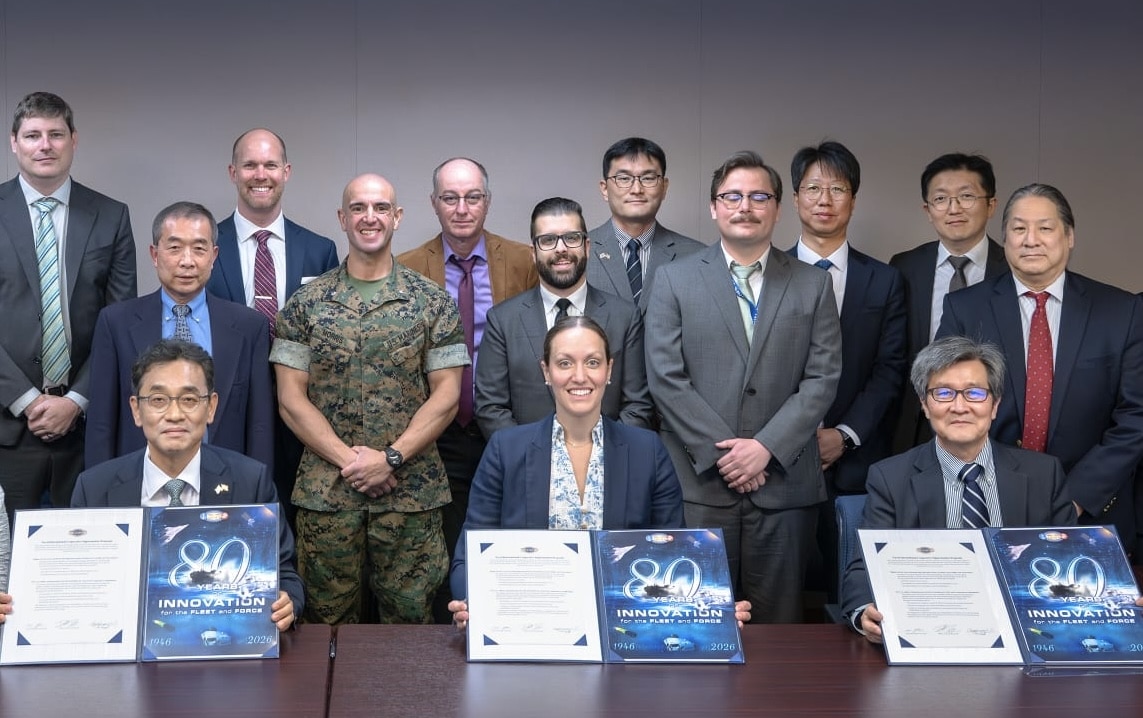
If HD HHI is being brought into the ONR portfolio for surface combatant or submarine research, this opens a production pathway for allied shipbuilding to absorb overflow from U.S. yards during sustained combat operations.
Given Japan's April announcement of hypersonic coastal missiles by 2032 and North Korea's formal military integration with Russia, the U.S. is simultaneously hardening its own industrial base AND distributing critical naval R&D across trusted allied yards. This splits the risk: a strike on a U.S. shipyard no longer stops the entire program.
Conversely, it may signal that NAVSEA has already identified capacity bottlenecks in the FY27-FY30 FYDP that domestic yards cannot absorb.
This breaks a 75-year precedent.
The U.S. Navy has never contracted research directly to a Korean shipbuilder before, which signals either a surge in allied naval capacity or a deliberate diversification away from sole reliance on U.S. primes during a three-carrier deployment cycle.
Against the backdrop of Hegseth's global lethal-force authorization and three carriers simultaneously in CENTCOM, ONR doesn't expand vendor bases for incremental reasons. The contract suggests the Navy is stress-testing its industrial depth ahead of sustained high-tempo operations.
Without knowing the contract scope—whether this is basic research, prototype work, or production-ready systems—it's impossible to assess whether this is a one-off or the start of a broader shift toward allied co-production under wartime conditions.
What is the contract scope and dollar value? Is this basic research (low risk, low stakes) or applied R&D on a system destined for U.S. Navy platforms? Does the contract include any technology transfer or IP restrictions tied to allied interoperability standards?
Fault Lines
Strategic intelligence, synthesized daily — with a public track record. Every call graded against what actually happened.