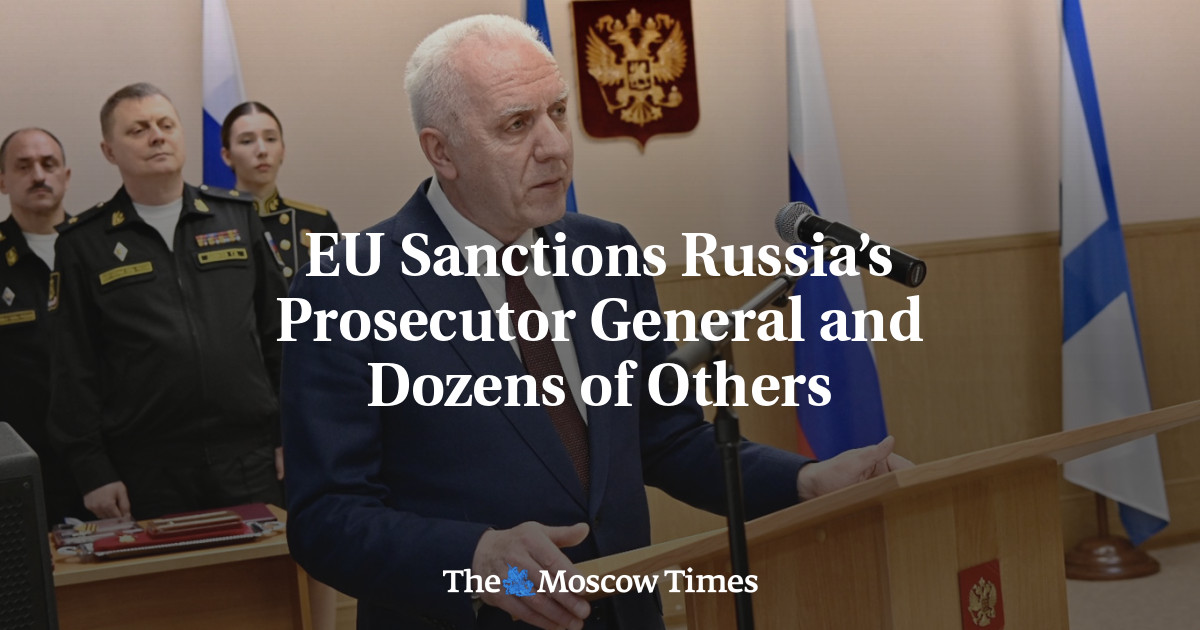
EU Sanctions Russian Prosecutor General, FSB Officers Over Navalny Persecution
Individual sanctions on regime officials have minimal direct economic impact — the Prosecutor General's personal assets are already likely frozen or hidden. The real mechanism is reputational and institutional: it forces other Russian officials to calculate whether following orders that trigger EU designation is worth the personal cost.
If Moscow responds by rotating personnel or creating bureaucratic distance between the Prosecutor General's office and specific decisions, that's a tell that the designations are working. If the Kremlin doubles down on repression regardless, it signals that internal loyalty mechanisms are stronger than external sanctions pressure.
Brussels is escalating its use of individual accountability designations as a secondary lever after primary sanctions have already constrained Russia's financial system.
The Prosecutor General designation targets the official apparatus responsible for political persecution — signaling EU intent to make the cost of repression personal for senior regime figures.
This matters for three specific constituencies: (1) Other Russian officials weighing compliance with Kremlin orders versus exposure to asset freezes and travel bans; (2) EU member states managing secondary sanctions enforcement and deciding which Russian entities and individuals to prioritize in their own designation lists; (3) Investors assessing counterparty risk with Russian state entities — the Prosecutor General's office coordinates with courts and security services on asset seizures and legal proceedings, so sanctions on its leadership create compliance friction for any Western firm with Russian legal exposure.
Watch for whether additional FSB officers are designated in the next sanctions cycle (expected Q3 2026), which would indicate whether Brussels is building toward systematic targeting of the security apparatus or treating this as a one-off response to Navalny's death.
Did the article specify which FSB officers were sanctioned and their specific roles in Navalny's case, or was the designation limited to the Prosecutor General?
Fault Lines
Strategic intelligence, synthesized daily — with a public track record. Every call graded against what actually happened.