Air Force Confirms Sentinel ICBM On Track for Early 2030s Ops, Clears 2026 Review
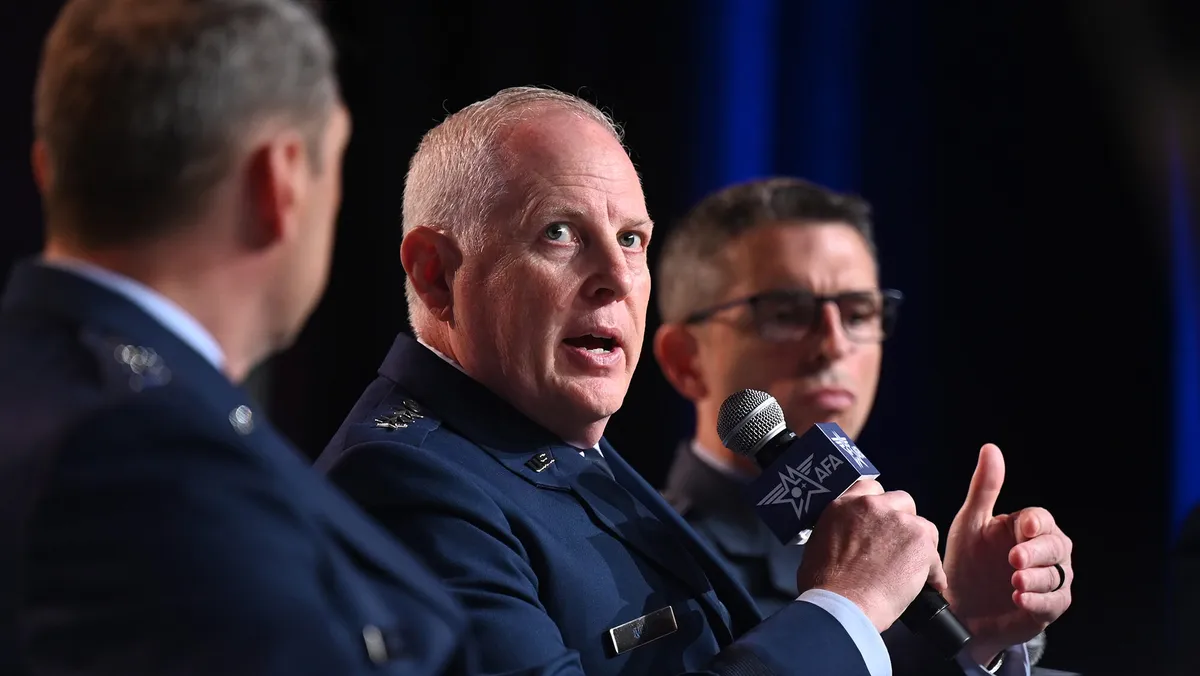
An early 2030s Sentinel IOC anchors the Air Force's triad modernization timeline and creates a hard constraint on silo infrastructure spending (electrical, communications, security upgrades) that must complete in parallel.
If Sentinel delays past 2032, the Air Force must either extend Minuteman III service life (increasing sustainment costs and deferring recapitalization savings) or accelerate B-21 bomber IOC to compensate for a weakened land leg — a reallocation that compresses bomber production rates and affects supply chain commitments to RTX and Northrop across multiple programs.
Sentinel's early 2030s IOC locks in the recapitalization schedule for the U.S. land-based deterrent leg — a 50+ year asset class with no substitutes.
Northrop Grumman's delivery cadence now drives Air Force missile squadron activation and ICBM infrastructure modernization through the decade.
If the 2026 milestone slips, the entire operational timeline compresses, forcing either concurrent testing and fielding (schedule risk White explicitly denies) or a push past 2030 that extends the life of aging Minuteman III missiles and delays the silo modernization budget line.
Program cost overruns — already a Sentinel risk factor — would surface in FY27-28 budget justifications and could trigger reprogram pressure on other Air Force modernization accounts.
The article does not specify which 2026 milestone White referenced, the current program cost baseline, or whether the early 2030s IOC applies to the first operational squadron or full fleet deployment across all 400 silos.
Fault Lines
Strategic intelligence, synthesized daily — with a public track record. Every call graded against what actually happened.