Kremlin Signals Continued Iran Coordination as Strikes Escalate
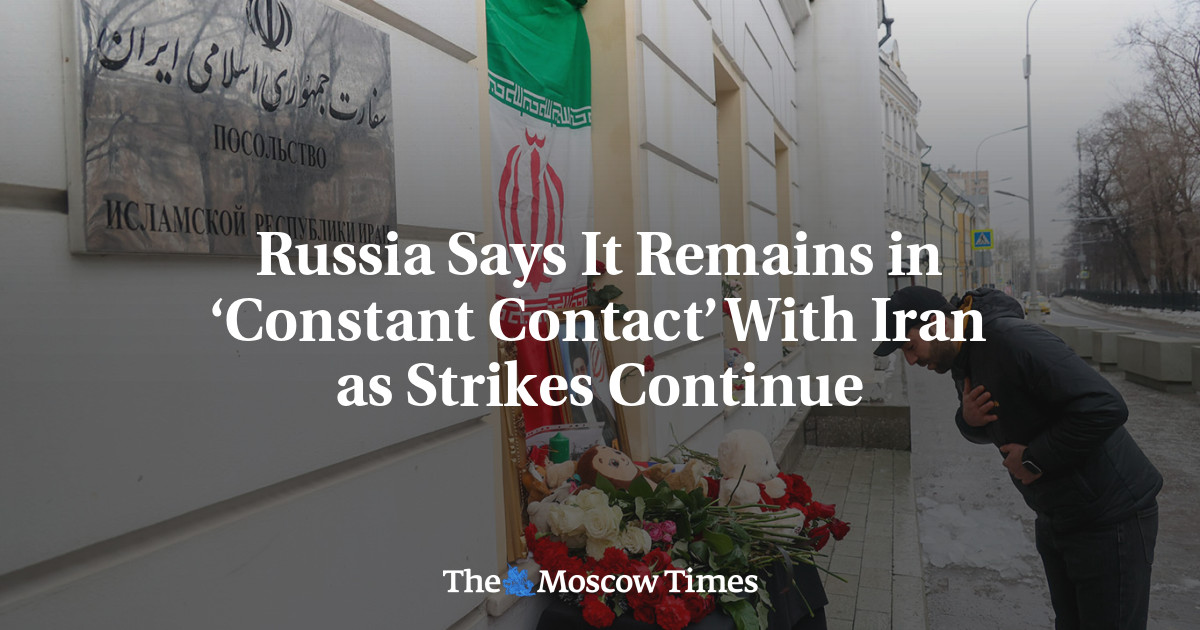
If Russia is actively coordinating with Iran on a military or intelligence response to external strikes, it converts the Iran nuclear crisis from a unilateral US-led enforcement problem into a tripartite great-power competition—forcing US regional allies (Israel, Gulf states, NATO) to reassess whether Iranian air defense upgrades or Russian logistics support alter the calculus for future strikes.
Conversely, if Russia's statement is purely diplomatic cover, it signals Moscow is willing to absorb reputational cost with Iran to avoid direct military entanglement, which would weaken Iran's deterrent posture and embolden further strikes. The outcome hinges on what 'constant contact' operationalizes into—weapons transfers, targeting intel, or words only.
Russia's public reaffirmation of contact with Iran during active strikes suggests Moscow is either coordinating a joint response or positioning itself as a mediator—either stance signals deepening US-Russia-Iran triangle friction that could affect sanctions enforcement, proliferation control, and regional military posturing.
However, the article provides no specifics on strike origin, scale, or targets, making it impossible to assess whether this represents tactical coordination or rhetorical positioning.
If strikes are Israeli or US-led, Russia's statement may precede a formal Iranian military response, which would shift deterrence calculations in the Gulf; if the strikes are internal Iranian security operations, the statement is largely diplomatic theater. The absence of detail on who is striking whom and why limits actionability.
The article does not identify who is conducting the strikes, what targets are being hit, Iran's military response posture, or whether Russia's 'constant contact' involves material support, intelligence sharing, or diplomatic messaging only.
Fault Lines
Strategic intelligence, synthesized daily — with a public track record. Every call graded against what actually happened.