South Korean KSS-III Submarine Arrives in Canada During Ottawa's Submarine Procurement Decision Window
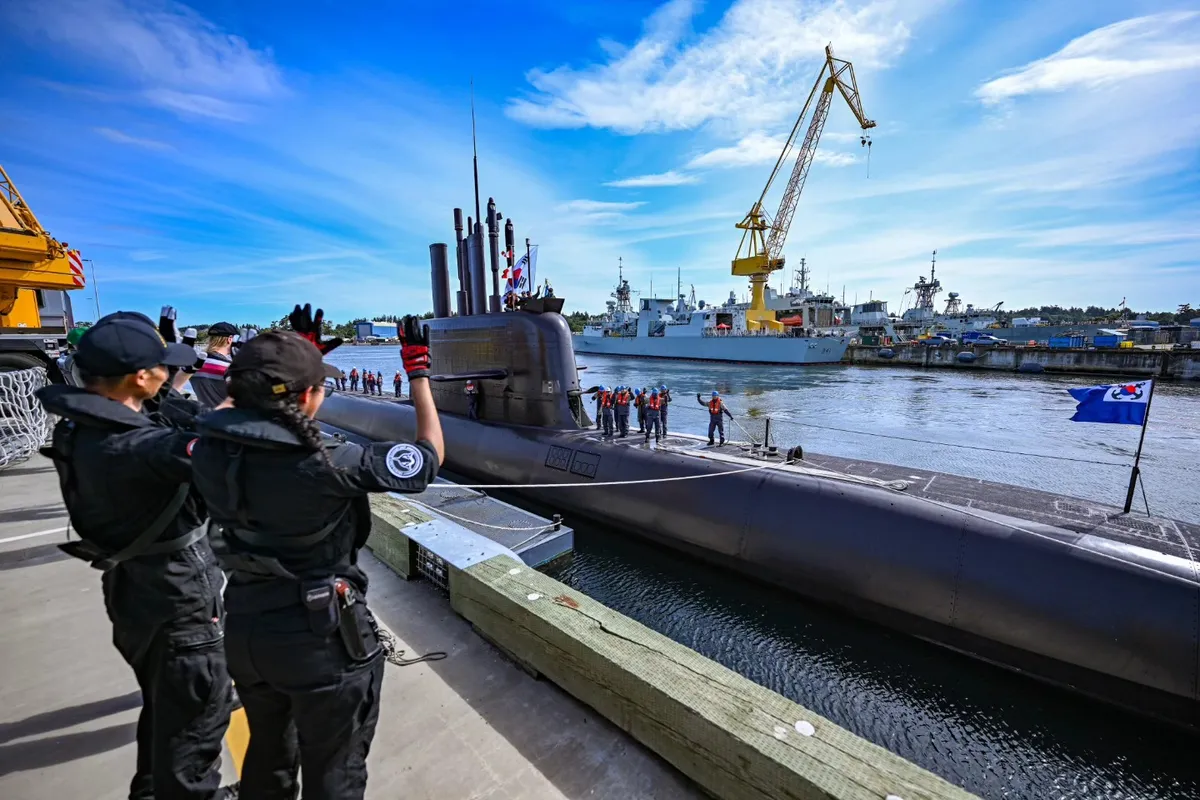
This is a soft power play wrapped in a port visit. South Korea is not just showcasing a submarine—it's demonstrating that the KSS-III can sustain operations across the Pacific, which directly addresses Canada's stated need for extended Indo-Pacific presence. If Canada selects the KSS-III, it locks into South Korean supply chain dependency for 30+ years of sustainment and spares.
That dependency becomes leverage for Seoul in future NATO-Korea security negotiations.
Canada's submarine selection will determine whether it acquires a proven platform (South Korea's KSS-III) or pursues an unproven domestic design—a $15B+ decision that will shape Canadian ASW capability in the Indo-Pacific through 2050.
The KSS-III's arrival in Victoria is a live demonstration of operational range and reliability, directly addressing Canada's stated requirement for long-range Pacific patrols and reducing procurement risk relative to alternatives.
Ottawa must decide by late 2026 or early 2027; the KSS-III's physical presence eliminates the abstraction from the selection calculus and forces the Canadian Navy and Defence Ministry to confront the operational trade-offs in real time.
Has the Canadian Navy conducted independent performance assessments of the KSS-III during this port call, and will those findings be made available to the procurement decision-makers before the final RFP award?
Fault Lines
Strategic intelligence, synthesized daily — with a public track record. Every call graded against what actually happened.