Greece Deploys FDI Frigate to Cyprus, Extends Air Defense Against Iran Drones
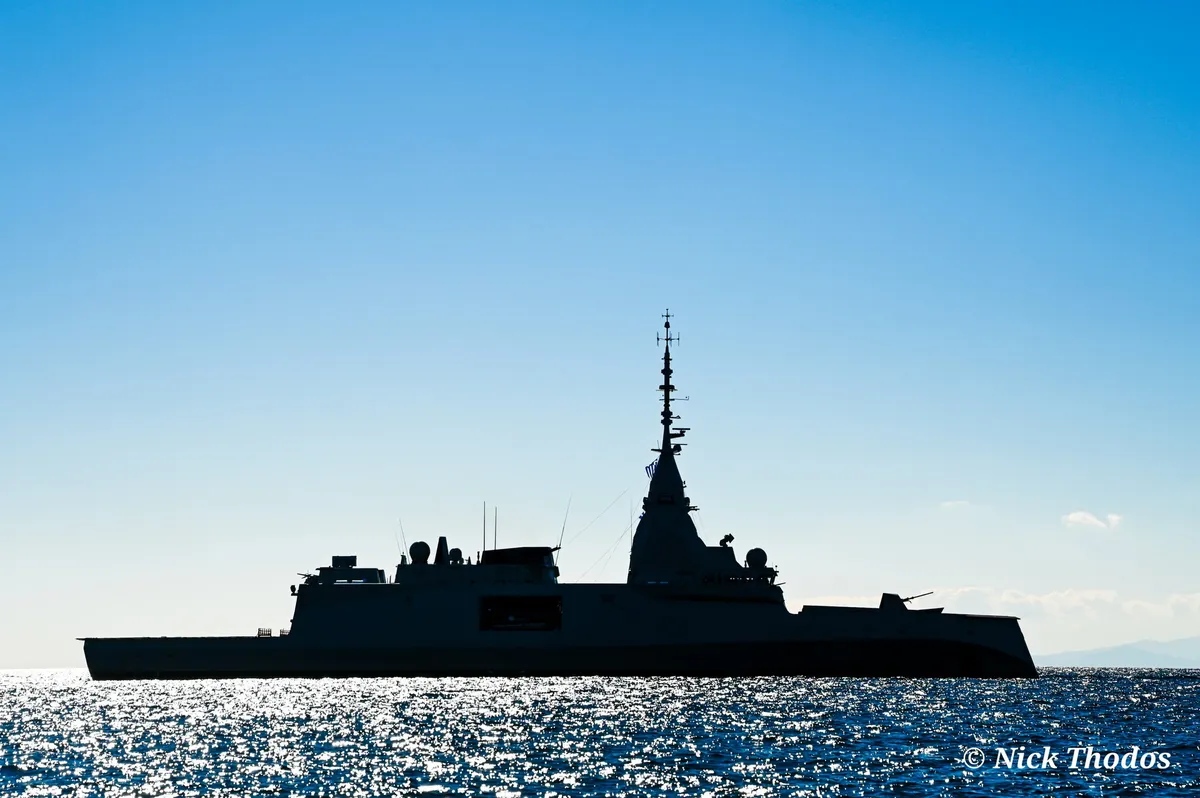
The operational deployment of the Kimon under Iranian drone pressure creates a live test case for the FDI combat system integration (SEAFIRE radar + ASTER missiles) that will inform allied procurement decisions across the Mediterranean and NATO's southern flank.
If the Kimon successfully defends Cyprus, Greek and allied navies may accelerate frigate modernization contracts; if performance gaps emerge, Naval Group faces retrofit demands and potential order delays.
Simultaneously, the deployment extends NATO air defense coverage into the Eastern Mediterranean, which may trigger Turkish, Italian, or French frigate deployments to maintain capability parity, cascading into shipyard scheduling and combat system supply chain pressure.
This is the operational debut of Greece's first FDI frigate in a contested theater, validating the platform's air defense architecture (SEAFIRE/ASTER integration) under pressure.
For Naval Group (builder) and Thales (combat system), this is a live reference for allied procurement decisions in the Eastern Mediterranean and Middle East. For Greek and Cypriot defense planners, the deployment signals that the FDI platform meets their minimum air defense threshold — relevant to future Greek frigate orders and potential Cyprus co-procurement.
The escalation also forces NATO to extend air defense coverage southward, which may accelerate allied procurement timelines for short-range air defense systems in the region.
The article does not specify the scale, frequency, or sophistication of Iranian drone attacks on Cyprus, nor does it detail the Kimon's current readiness posture (crew training, ammunition load, maintenance status).
Fault Lines
Strategic intelligence, synthesized daily — with a public track record. Every call graded against what actually happened.