India Tests AD-1, AD-2, NASM-MR, Rudram-2, LRLACM Across BMD, Anti-Ship, Land-Attack Missions
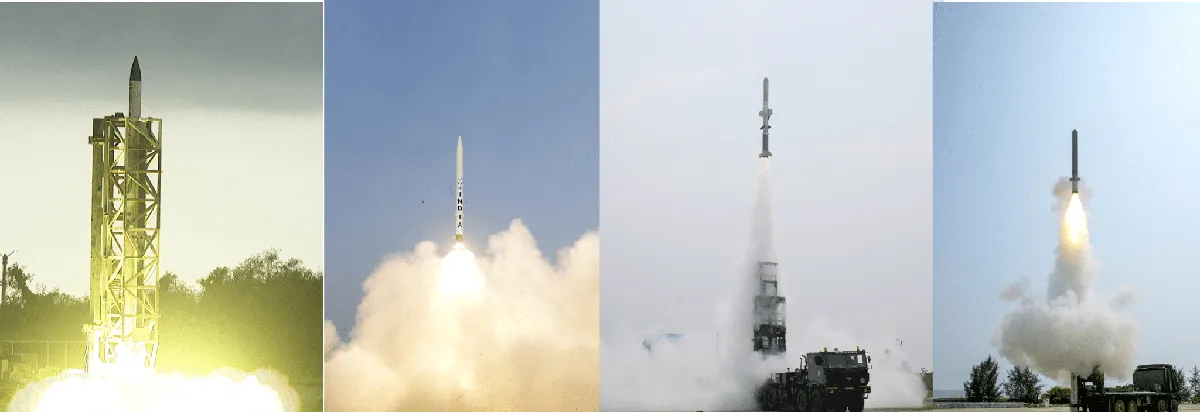
If the NASM-MR achieves operational deployment within 18-24 months, Indian Navy force structure shifts: fewer escort vessels per task group, more tonnage available for power projection into the Strait of Malacca. That reallocation directly competes with Chinese carrier task group presence in the same waters.
The Rudram-2 and LRLACM tests signal India's pivot toward stand-off strike — reducing dependence on air superiority in a near-peer conflict scenario where Pakistan and China might contest the airspace. This is asymmetric hedging: India is building a force posture that works even if it loses air dominance.
India is closing operational gaps across three mission areas simultaneously — air defense, sea control, and deep strike — that directly constrain force posture against Pakistan and Chinese naval presence in the Indian Ocean.
The NASM-MR and LRLACM tests matter most: a credible medium-range anti-ship capability forces the Indian Navy to reduce escort requirements for merchant convoys in the Arabian Sea, while the hypersonic land-attack system extends India's strike envelope into Pakistan's interior without requiring air superiority.
Watch the next test cycle (typically 60-90 days for DRDO) to confirm repeatability — single successful tests prove concept, not operational readiness.
What is the actual range of the LRLACM, and does it exceed Pakistan's air defense engagement envelope? DRDO has historically inflated range claims in press releases.
Fault Lines
Strategic intelligence, synthesized daily — with a public track record. Every call graded against what actually happened.