China Tests 3,500m Cable-Cutting Actuator; Signals Undersea Infrastructure Targeting Capability
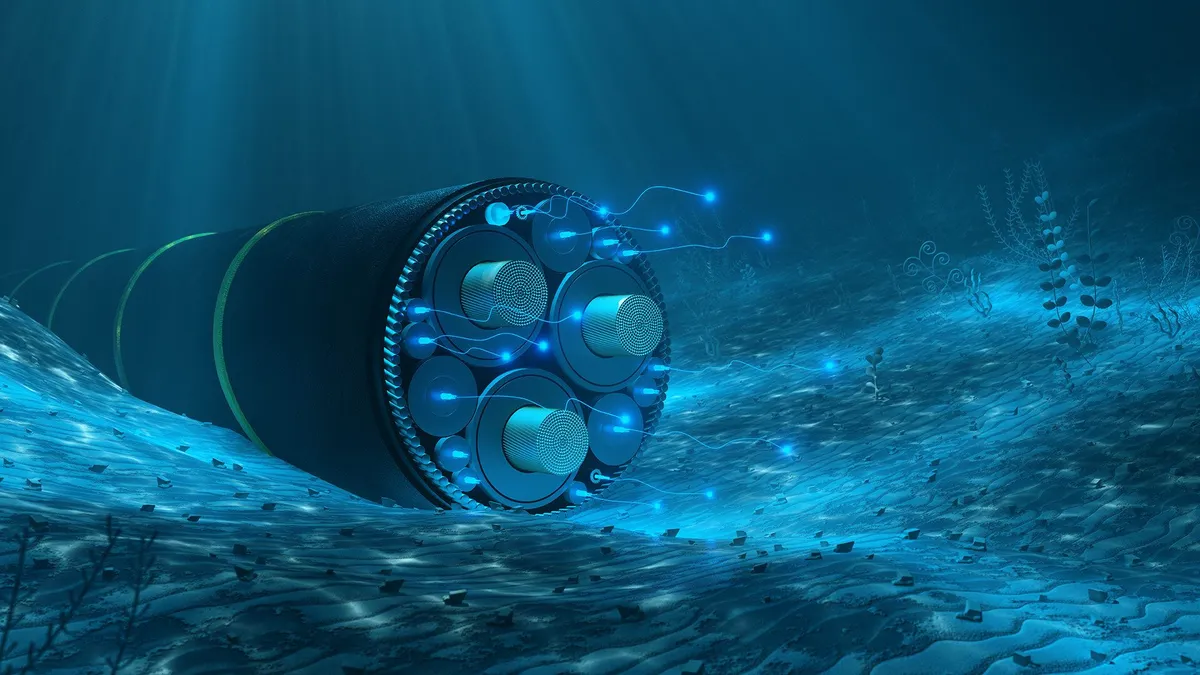
Cable-cutting capability converts the undersea infrastructure that NATO and allied powers depend on for real-time command-and-control into a coercive tool. If China can selectively sever transatlantic or Indo-Pacific cables during a Taiwan or South China Sea crisis, it forces allied decision-making under communications degradation — exactly when real-time coordination is most critical.
This intersects directly with Germany's April 15 decision to build independent European defense capacity: European commanders cannot rely on US-provided ISR and targeting data if the cables carrying it are cut.
This capability directly threatens the undersea cable infrastructure that carries ~99% of intercontinental data traffic and underpins allied military communications, financial systems, and intelligence networks.
In the context of active US-China competition and the ongoing Iran blockade (which has already triggered Chinese-Iranian intelligence integration), a demonstrated ability to cut cables at extreme depth creates a new asymmetric leverage point — China could disable allied communications without conventional military attribution.
This is not theoretical: cable cuts in the South China Sea and Indian Ocean have already disrupted regional connectivity; a weaponized, repeatable capability at 3,500m makes this a deliberate tool rather than an accident.
The timing — during active Hormuz operations and NATO discussions of independent European defense (which depends on transatlantic fiber) — suggests Beijing is signaling a counter-option to US maritime control.
The article does not specify whether this actuator is deployable via submarine, autonomous underwater vehicle, or surface vessel, nor does it identify which undersea cables (if any) China considers priority targets.
Fault Lines
Strategic intelligence, synthesized daily — with a public track record. Every call graded against what actually happened.