GAO: Air Force Tanker Fleet Missed Readiness Goals FY2019-2025 Due to Parts Shortages, KC-46 Delays
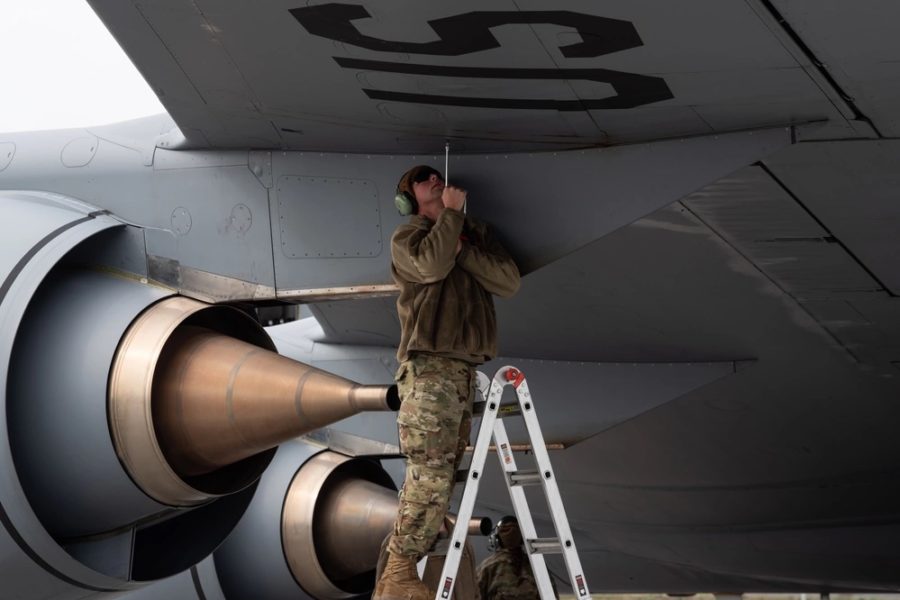
The GAO finding creates political cover for USAF to request production acceleration funding that would otherwise face scrutiny. If Congress treats this as a readiness emergency (which the Iran escalation reinforces), Boeing gets protected LRIP dollars that bypass normal competition.
The KC-46 program has already absorbed $6B+ in cost overruns; another supplemental request signals the airframe will never achieve the unit cost targets in the original FYDP.
This also exposes a second-order constraint: if parts suppliers are the bottleneck (not assembly capacity), throwing money at Boeing alone won't fix the problem — Congress would need to fund supplier capacity expansion, which takes 18-24 months to deliver production impact.
The KC-46 production delays and parts supply constraints are now formally documented as operational readiness failures — which forces USAF and Congress to choose between accepting reduced tanker availability during the current Iran-US escalation cycle, or requesting emergency LRIP acceleration in FY27 appropriations.
The six-year miss on availability targets means the legacy KC-135 fleet is being flown beyond planned retirement dates to backfill KC-46 delivery shortfalls; if the Hormuz rotation sustains (Iran struck US bases in Bahrain and Jordan on June 10), the tanker fleet faces a capacity crunch by Q4 2026 when multiple squadrons cycle through theater simultaneously.
Watch whether Boeing's KC-46 production rate increases in Q3 2026 earnings guidance, and whether USAF requests emergency funding in the FY27 supplemental.
What is the actual KC-46 delivery cadence — units per quarter — and does Boeing have the supply chain capacity to accelerate without further delays?
Fault Lines
Strategic intelligence, synthesized daily — with a public track record. Every call graded against what actually happened.