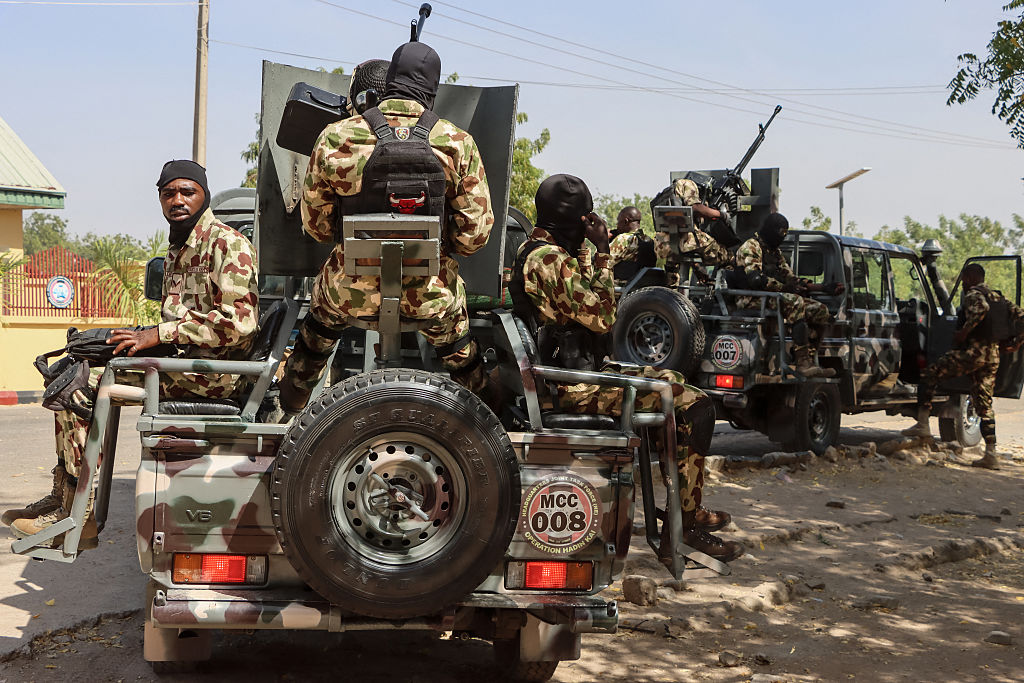
ISWAP Kills Nigerian Base Commander in Borno; Northeastern Territory Control Deteriorates
Mali's military collapse (April 26 signal) removes a buffer between ISWAP-held territory and the Atlantic coast. If ISWAP consolidates northeastern Nigeria while Tuareg forces control Mali, the entire Sahel west of Lake Chad becomes ungoverned space.
This forces France and the U.S. to either surge counterinsurgency operations in Nigeria (draining resources from Indo-Pacific posture) or accept a sanctuary for transnational jihadist networks — either choice reshapes African Command's operational planning and procurement priorities away from state-on-state deterrence and toward irregular warfare platforms.
This is a tactical loss in a territory where Nigeria's military has been steadily losing ground.
A base commander kill signals either operational security failure or ISWAP's ability to penetrate Nigerian force disposition — both bad. The timing matters: Mali's junta just collapsed under Tuareg pressure (April 26 signal), and if that cascade accelerates westward into Niger and northern Nigeria, you're looking at a Sahel-wide state capacity crisis.
For defense investors, this means Nigerian procurement will either collapse entirely if the government destabilizes, or shift toward counterinsurgency platforms (loitering munitions, ISR, light armor) that can operate in contested terrain. Watch whether the U.S. or France accelerates military advisory presence or pulls back.
Are these base-level attacks coordinated with ISWAP's broader territorial ambitions in the Lake Chad region, or are they opportunistic raids to inflict casualties and degrade morale?
Fault Lines
Strategic intelligence, synthesized daily — with a public track record. Every call graded against what actually happened.