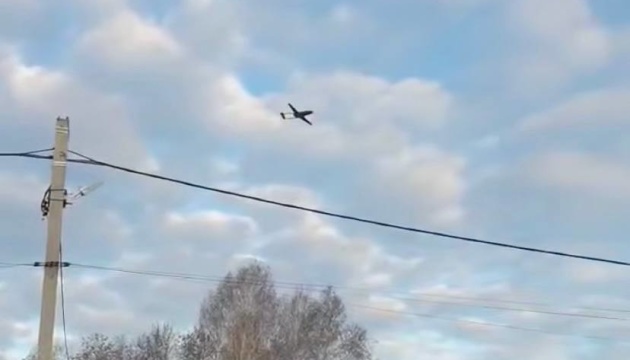
Ukrainian Drones Strike Urals for First Time; 1,600+ km Range Extends Deep into Russian Heartland
This intersects directly with the Brave1 decentralized procurement system already delivering 181,000 items to Ukrainian units.
If drone production is now flowing through points-for-kills incentives and units are sustaining extended-range operations, Ukrainian procurement is outpacing Russian air defense deployment — the supply chain feedback loop is compressing decision cycles and forcing Russia to defend an expanding perimeter.
The longer the reach, the more Russian logistics nodes become targetable, which accelerates attrition of rear-area supply and forces further dispersion of manufacturing.
This extends the operational reach of Ukrainian strike capability into previously untouched Russian territory.
If confirmed as a combat strike (not just a transit), it signals that Ukrainian drone programs have achieved autonomous range and navigation well beyond the 1,000 km threshold — a capability that resets Russian air defense planning and forces repositioning of critical industrial and military assets deeper into the interior.
The Urals are Russia's primary strategic reserve for aircraft production (Tupolev, Ilyushin plants), tank manufacturing, and ammunition. However, the report lacks damage confirmation or target identification, so this reads as a capability demonstration rather than a decisive strike.
Did the drones strike a specific military or industrial target, or is this a range test? Damage assessment and target class matter enormously for assessing whether this is tactical harassment or operational disruption.
Fault Lines
Strategic intelligence, synthesized daily — with a public track record. Every call graded against what actually happened.