Space Force Accelerates AMTI Satellite Deployment Using Ground-Target Design Work
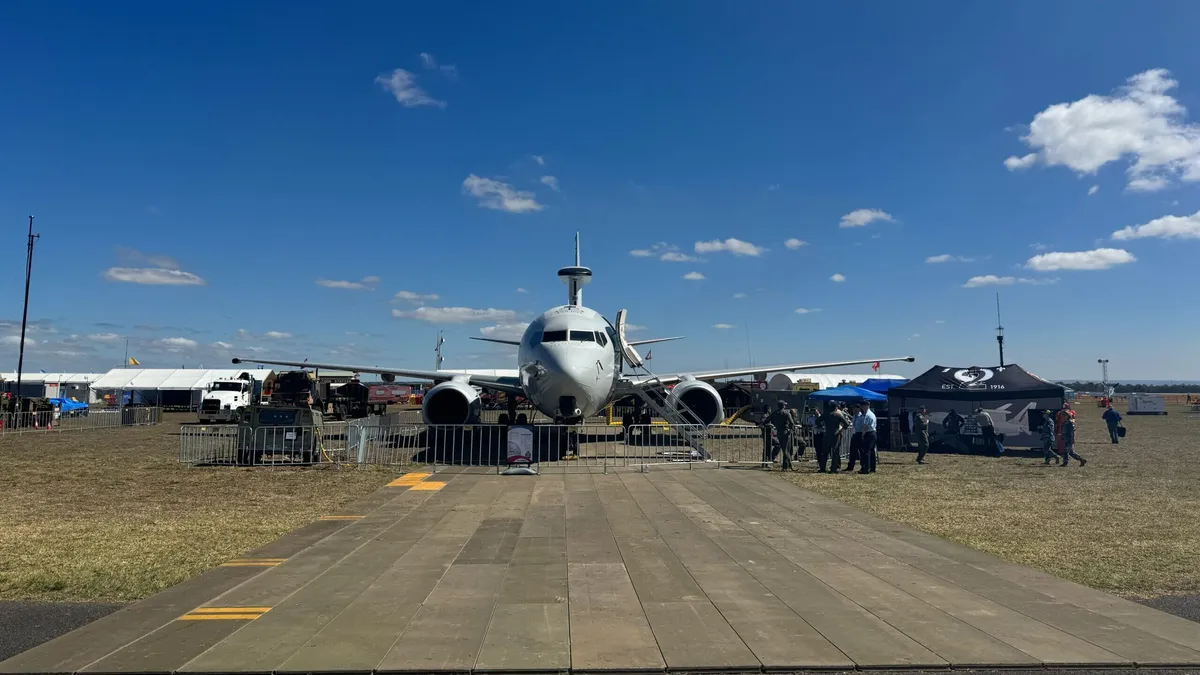
Faster AMTI deployment shortens the sensor-to-shooter loop in Pacific contingency scenarios, reducing the time window for adversary air defense repositioning and allowing allied air operations to react to real-time threat movement.
This directly affects force design assumptions in Pacific Command's air campaign modeling and may reduce the reliance on forward-based ISR assets (RC-135, E-8 JSTARS sustainment), freeing capacity for other theaters.
This represents a concrete reuse strategy to compress AMTI development timelines — a capability gap that has driven Air Force and allied ISR priorities for three years.
If design transfer proves viable, it reduces engineering risk and accelerates a system addressing near-peer air defense and cruise missile detection over contested zones.
The constraint is whether ground-target satellite architecture (likely lower latency, higher revisit-rate requirements) actually maps to aircraft/missile tracking without redesign; the article does not clarify technical compatibility or funding magnitude, making cost and schedule claims provisional.
The article does not specify: (1) which ground-target satellite program is being leveraged; (2) how much design reuse is actually applicable to AMTI (different sensor payloads, orbital mechanics, processing pipelines may require substantial rework); (3) the dollar amount of increased funding or the...
Fault Lines
Strategic intelligence, synthesized daily — with a public track record. Every call graded against what actually happened.