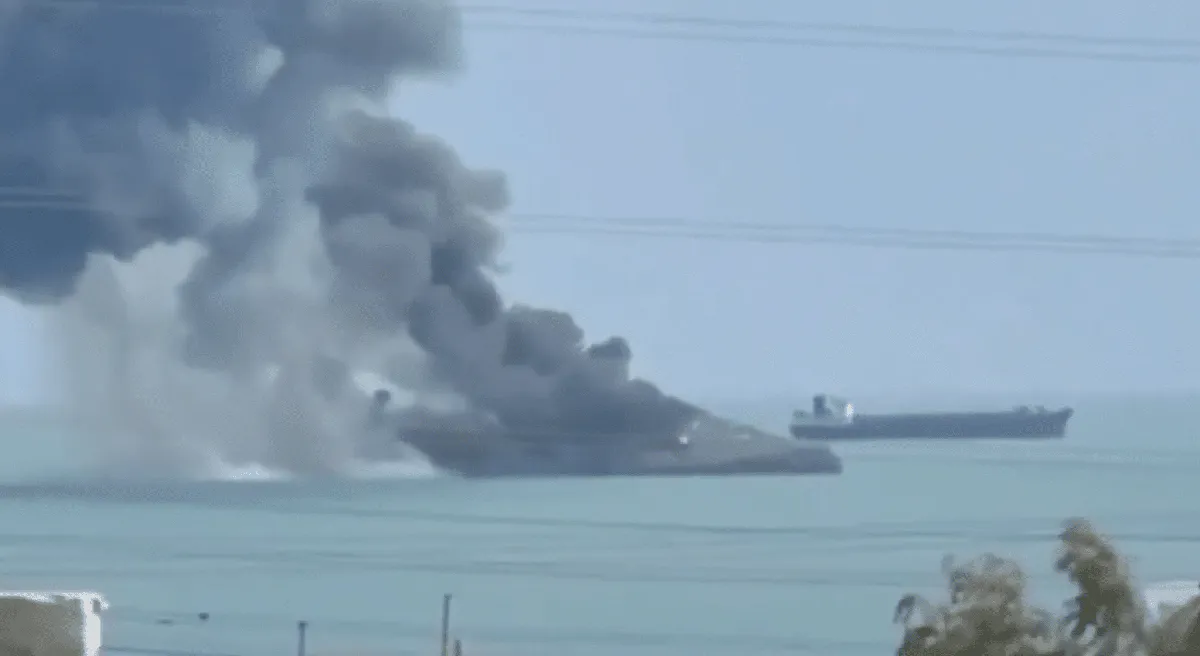
US Navy Sinks Second Iranian Corvette; Naval Attrition Accelerates Amid Concurrent Strikes
Rapid naval attrition forces Iran to accelerate unmanned and subsurface platforms to maintain Hormuz closure capability, which in turn increases merchant shipping insurance premiums and extends US Navy presence requirements in the Gulf — directly competing with Pacific Command's force posture against China.
If Iran cannot reconstitute surface vessels, it must substitute volume with cheaper asymmetric platforms (Shahed drones, Fateh missiles), lowering cost-per-strike and extending the conflict's duration despite reduced Iranian conventional capacity.
Iran's naval surface fleet is being degraded faster than it can be replaced.
The Shahid Soleimani-class represents Iran's most advanced corvette platform; losing two major surface combatants within 24 hours (Dena frigate + Haj Qasem corvette, 104+ sailors killed in Dena alone) eliminates Iran's ability to contest the Strait of Hormuz through conventional naval presence.
This accelerates Iran's reliance on asymmetric tactics — fast-attack craft, mines, drones, and missiles — which are already in use (10 vessels attacked in Hormuz since March 1).
The loss also compounds succession instability: Iran's new Supreme Leader Mojtaba Khamenei inherits a military hemorrhaging capital assets while simultaneously defending against 28+ documented Iranian strike waves and Israeli strikes on nuclear infrastructure. Naval reconstruction timelines stretch 5-10 years; the window for Iranian naval reconstitution closes during the current conflict.
The article does not specify the method of strike (missile, air-launched weapon, submarine-delivered) or confirm Iranian casualty count from the Haj Qasem attack. Damage assessment detail is absent — whether the vessel is total loss or damaged but recoverable affects force reconstitution calculus.
Fault Lines
Strategic intelligence, synthesized daily — with a public track record. Every call graded against what actually happened.