AFCENT Awards Kraus Hamdani $270M Solar Drone Contract Amid Iran Ceasefire
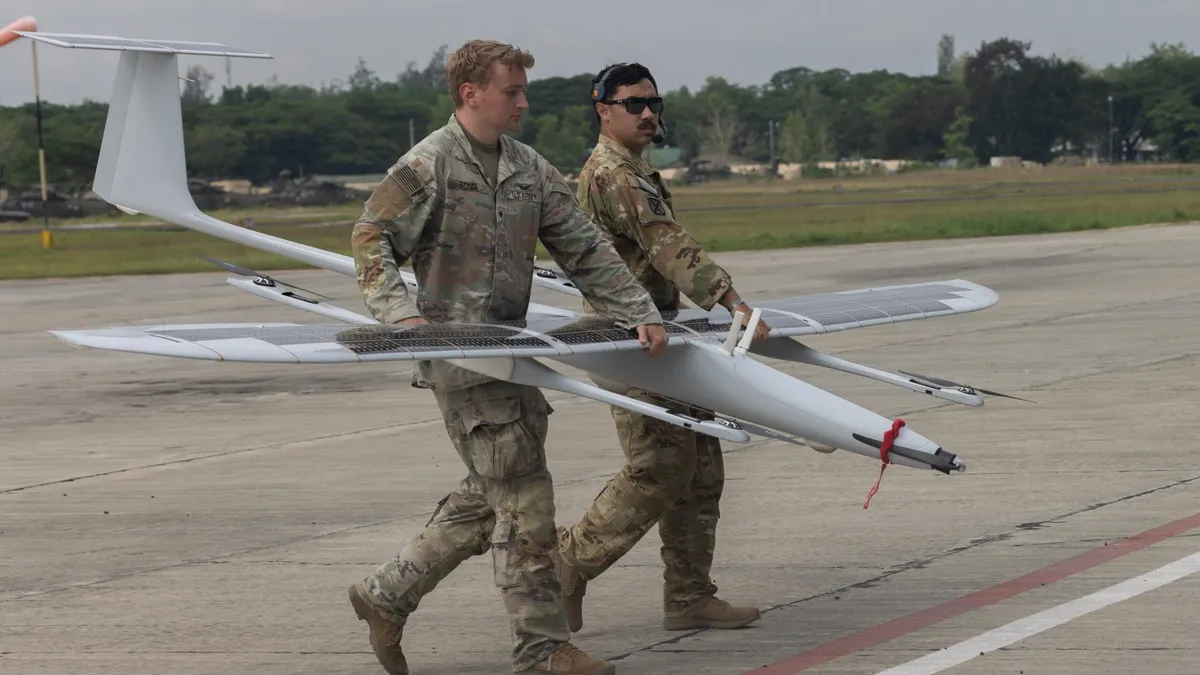
The K1000ULE procurement directly addresses the ISR blind spot exposed during the April 6-8 escalation, when B-2 strikes on IRGC command compounds and Israeli strikes on Iranian airports forced real-time targeting decisions without persistent overhead coverage. Extended endurance and solar power reduce the forward basing footprint that NATO fragmentation (Italy's Sigonella denial) made vulnerable.
If production scales beyond this initial contract, it reshapes the cost equation for sustained Middle East operations—shifting from expensive manned sorties and coalition airspace access to autonomous persistence, which reduces political friction with reluctant allies.
The timing exposes a critical capability gap that the Iran crisis made urgent: persistent ISR over the Middle East without requiring forward basing or frequent sortie cycles.
The K1000ULE's three-day endurance and solar power eliminate the logistics tail that constrained operations during the 72-hour escalation window (April 6-8). For AFCENT, this locks in a platform that reduces dependence on contested airspace and forward fuel supply chains—vulnerabilities that became acute when Italy denied overflight rights and Russia/China blocked UN coordination of Hormuz shipping.
However, the contract's $270M value suggests limited initial production; scaling to theater-wide coverage would require follow-on orders that depend on whether the ceasefire holds. If Iran violates the two-week truce, this contract becomes evidence that DoD is hedging against renewed escalation rather than betting on de-escalation.
The article does not specify production rate, unit cost, or total aircraft quantity under the $270M contract—only that it is a 'seven-year production agreement.' Without knowing whether this is 10 airframes or 100, the strategic impact on AFCENT's ISR capacity cannot be assessed.
Fault Lines
Strategic intelligence, synthesized daily — with a public track record. Every call graded against what actually happened.