Finnish Military Detects Strike on Russian Warship in Gulf of Finland
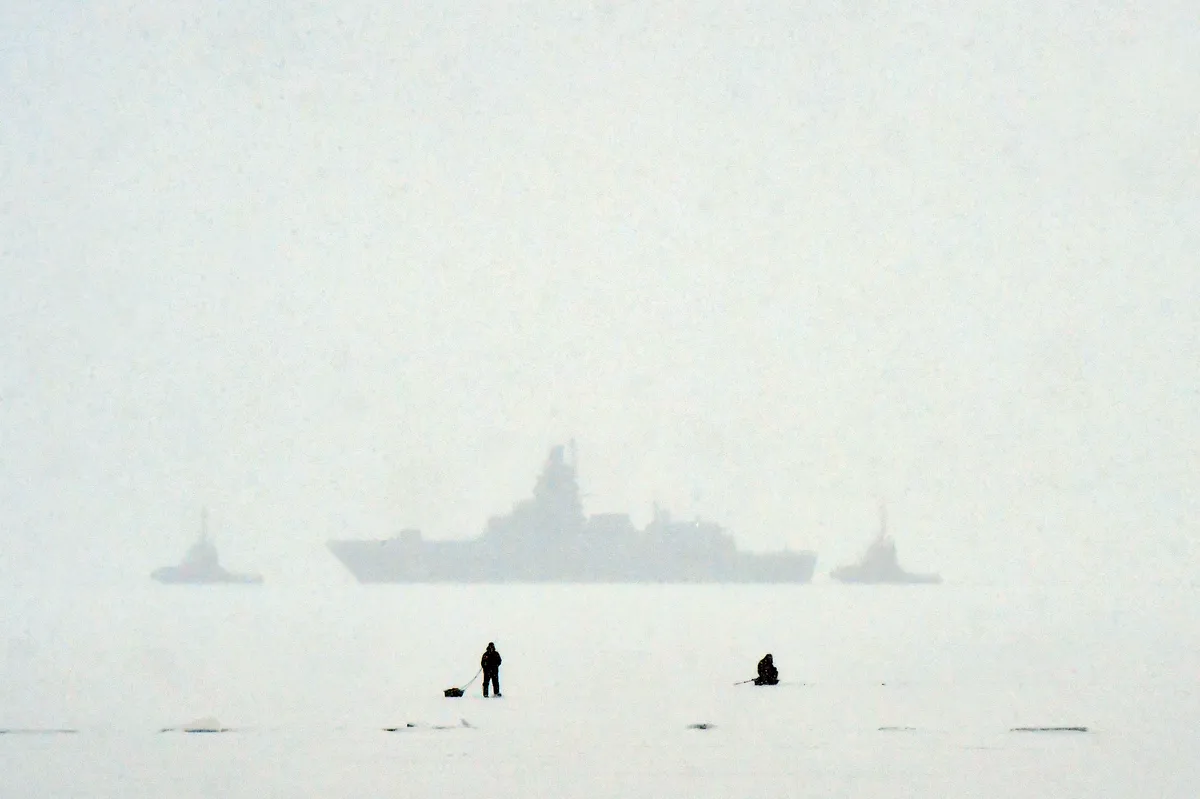
Finland's Defence Forces confirmed on November 13 that they detected a strike on a Russian warship in the Gulf of Finland on November 12, and Estonian media identified the vessel as a small Russian navy ship that subsequently returned to St. Petersburg under its own power.
The BBC, drawing on sourcing not shared by Finnish military spokespeople, reported the attacker was a Ukrainian drone — making this, if confirmed, the first drone strike on a Russian vessel in an open stretch of the Baltic Sea. Finnish Defence Forces declined to name the weapon, the attacker, or the exact detection method, so the BBC's attribution rests on sourcing the Finnish military has not validated.
The vessel's self-return to St. Petersburg is the one hard data point on damage: it was not sunk, and propulsion was intact.
The second-order pressure falls on NATO's Baltic members, not on Finland directly. Estonia, Latvia, and Lithuania had already issued civilian shelter warnings on November 12 over drones in their airspace, and NATO had scrambled fighters before the warship strike was even publicly confirmed — meaning alliance air-defense assets were already committed when this incident occurred.
If Kyiv deliberately targeted the warship rather than striking it as a navigational accident during a Leningrad-region drone wave, the question alliance capitals cannot defer is whether Ukrainian strike drones operating in the Gulf of Finland — a waterway shared by Finland and Estonia, both NATO members — require a formal rules-of-engagement clarification with SACEUR.
That conversation has no clean deadline, but the next NATO defense ministers' meeting becomes the forcing event if attribution firms up before then. The insurance and shipping exposure at Ust-Luga, the Baltic port already inside Ukraine's drone target envelope, is a separate but related pressure on commodity flows that this incident will amplify without resolving.
Kyiv faces the sharper immediate decision. A deliberate warship strike in the Baltic expands the naval campaign's geographic logic beyond the Black Sea, where Ukraine has demonstrated consistent capability. Claiming it openly invites diplomatic friction with alliance partners who have spent two years managing the stray-drone problem. Staying silent preserves operational ambiguity but cedes the narrative to Moscow.
BBC World News reported on November 12 that a Ukrainian drone struck the Russian warship — the first such attack on a Russian vessel in an open stretch of the Baltic Sea — a claim Finnish Defence Forces have neither confirmed nor denied, leaving attribution unresolved but consequential.
Estonia, Latvia, and Lithuania had already issued public shelter warnings over drones in their airspace on the same day, and NATO had scrambled fighters, so this strike landed inside an alliance-wide air-defense event rather than in isolation. The vessel's return to St.
Petersburg under its own power indicates limited damage, which reduces Moscow's immediate pretext for a symmetric naval response but does not eliminate it.
Ukraine's drone campaign against the Leningrad region has already targeted Ust-Luga, a major Baltic export port for oil and grain, and a confirmed warship strike extends that campaign's reach into a domain — open-sea naval targeting — where NATO members share the water.
Watch for whether Finland or Estonia formally attributes the strike in the days ahead: official attribution by a NATO member would convert this from a monitored incident into an alliance-level policy question about Ukrainian operations in shared maritime space.
Did Finnish Defence Forces detect the strike via radar, acoustic sensors, or satellite imagery, and does the detection method allow attribution to a specific weapon type — specifically a Ukrainian naval drone versus a missile?
Fault Lines
Strategic intelligence, synthesized daily — with a public track record. Every call graded against what actually happened.