Macron Commits €1B to French Quantum Plan as US-Europe Competition Accelerates
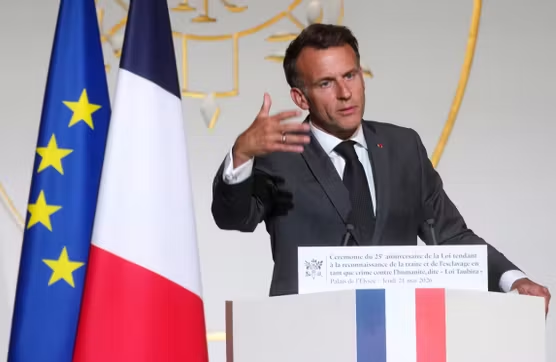
The €1B addition to a €1.8B original program (plus €500M defense supplement) signals France is doubling down on quantum as a sovereign capability, not a collaborative research domain.
If France deploys this capital into national champions (Thales, Airbus) rather than cross-border EU consortia, it fractures the European quantum ecosystem and forces Germany, the UK, and others to launch parallel programs — a capital inefficiency that benefits neither Europe nor the U.S., but consolidates China's relative position as the only major power treating quantum as a unified industrial strategy.
The real constraint is not funding but talent: France has roughly 800 quantum researchers; the U.S. has 3,200+. Macron's €1B does not solve that gap.
France is now matching U.S. quantum investment intensity — a direct signal that European capitals view quantum as a critical strategic domain where lagging risks industrial obsolescence and dependency.
Macron's timing, one day after the Commerce Department's $2B announcement, suggests deliberate policy synchronization with allied competition rather than independent initiative.
The €1B tranche forces French semiconductor and defense primes (Thales, Safran, Airbus Defence) to commit internal R&D resources to quantum-adjacent applications (radar, secure communications, cryptanalysis) — capital that would otherwise flow to conventional modernization.
Watch the EU's Horizon Europe quantum flagship allocation (expected Q3 2026) to see whether Brussels matches France's commitment or fragments the European effort across national programs.
Did Macron coordinate this announcement with the White House or Commerce Department beforehand, or is this a reactive move? The 24-hour lag suggests the latter — which would indicate Europe is now chasing U.S. technology policy rather than co-designing it.
Fault Lines
Strategic intelligence, synthesized daily — with a public track record. Every call graded against what actually happened.