Leonardo and Baykar Demonstrate In-Flight Control of Kizilelma Drone From M-346 Trainer Cockpit
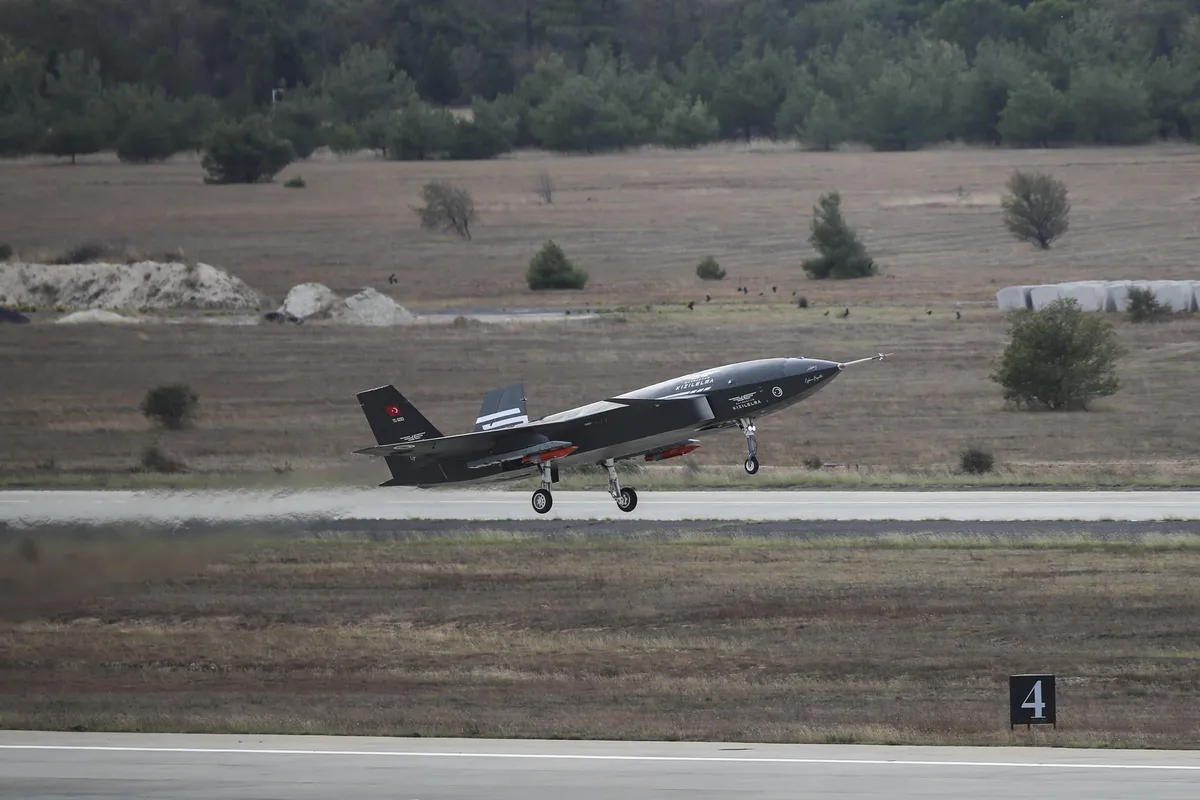
The timing matters: this test occurs while NATO is accelerating unmanned combat integration across AUKUS and European air forces (see Leonardo and Baykar's earlier K-SWARM announcement from June 22).
If K-SWARM proves reliable in multi-platform scenarios, Turkish-Italian cooperation on unmanned systems becomes a direct competitor to Northrop Grumman's RQ-180 and General Atomics' MQ-180 roadmaps — both of which assume U.S. control architecture.
The second-order effect: European air forces that currently depend on U.S. unmanned strike coordination (via NATO air command) gain a European alternative, which shifts leverage in future NATO procurement toward platforms that can integrate with both American and European unmanned systems.
This is the first operational demonstration that a manned fighter can command an unmanned combat aircraft in real time during flight — a capability that directly unlocks the distributed swarm tactics both NATO and allied air forces have been theorizing but not yet executing.
Leonardo and Baykar have now closed the gap between concept and practice, which means allied air commanders can begin planning mixed-manned/unmanned strike packages without waiting for further prototyping.
The next inflection is production-intent testing: if K-SWARM passes the next phase (expected by late 2026 or early 2027), Italy and Turkey will have a template for integrating Turkish unmanned fighters into NATO air operations — a move that breaks the current U.S. monopoly on unmanned strike coordination and gives European air forces an alternative to sole-source dependence on American systems.
Does the K-SWARM system architecture allow for multi-platform control (can one M-346 command multiple KIZILELMAs simultaneously, or is it one-to-one)? That distinction determines whether this is a tactical enhancement or a strategic capability.
Fault Lines
Strategic intelligence, synthesized daily — with a public track record. Every call graded against what actually happened.