GE Aerospace, Pratt & Whitney Advance Adaptive-Cycle Engines for Sixth-Gen Fighter Under USAF Program
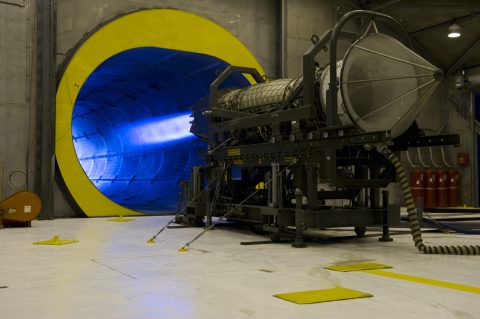
If GE or P&W wins the downselect, that prime becomes the sole propulsion integrator for the entire sixth-gen fighter family — a role worth $40-80B in lifetime engine production and sustainment. The loser faces a decade-long gap in fighter engine development work, forcing internal reallocation to commercial aerospace or exit from military turbofan competition entirely.
The timeline also exposes a constraint: if NGAP slips by 18 months, the Air Force's sixth-gen IOC date (currently 2035) becomes unachievable without accepting a legacy engine interim solution.
The NGAP competition locks in a 7-10 year development runway before a production engine enters service, meaning the winner's design will set the thermal and fuel efficiency baseline for all sixth-gen platforms through the 2040s.
This is not a contract award — it's a design selection gate that determines which propulsion architecture (variable cycle, hybrid-electric, or conventional high-bypass) the Air Force is betting on. Watch whether the USAF names a downselect winner by late 2027, which would trigger LRIP planning and supplier qualification timelines.
Does the article specify which design approach each contractor is pursuing (variable cycle vs. hybrid-electric vs. conventional), or is this a generic advancement announcement with no technical differentiation?
Fault Lines
Strategic intelligence, synthesized daily — with a public track record. Every call graded against what actually happened.