Niger Rebel Attacks on Oil Pipeline Threaten Junta Revenue Base
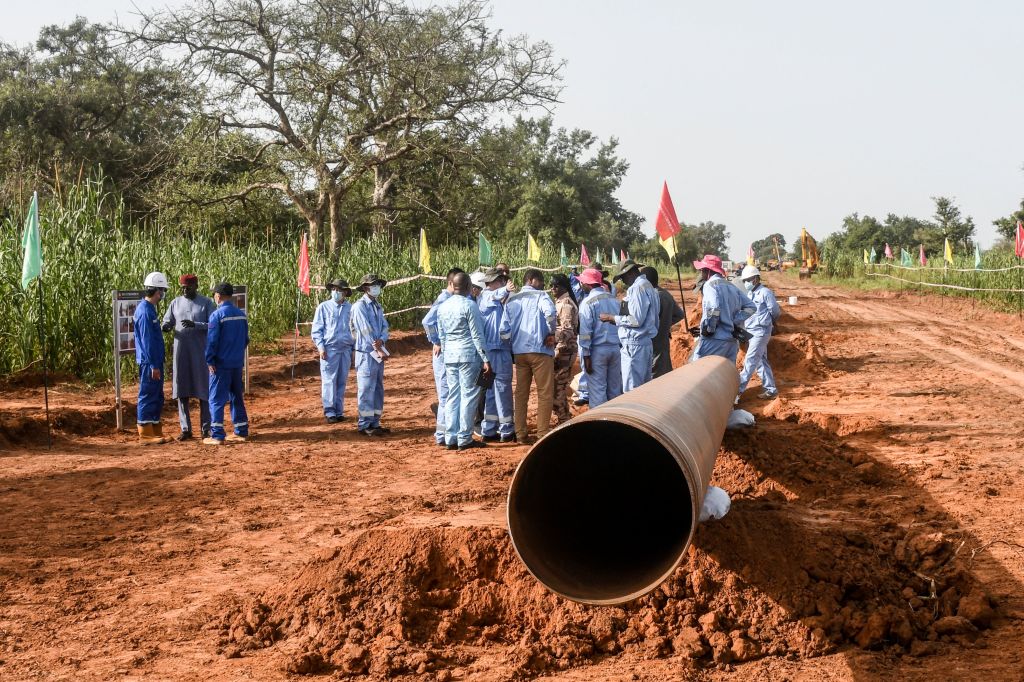
This is primarily a Power Projection story with secondary Market Forces implications. On Power Projection: pipeline sabotage directly erodes the junta's ability to fund military operations and sustains its grip—a classic insurgent strategy targeting state capacity rather than military units directly.
On Market Forces: if production losses are sustained, this affects global oil pricing at the margin (Niger produces ~200k bbl/day estimated, a small fraction of global supply) and creates operational risk for international oil companies, which may demand higher security premiums or withdraw.
Limited cross-pillar relevance unless MPLJ is backed by a rival state (unclear from this source), which would elevate this to a Geopolitical Friction story.
Oil revenue is the primary hard-currency source for Niger's military government; sustained pipeline damage could force budget cuts to security forces and accelerate regime instability.
However, the article provides no data on actual production losses, attack frequency, repair timelines, or MPLJ's organizational strength—making it premature to assess whether this represents a serious threat to junta control or a contained insurgent campaign.
The key variable is whether international oil companies (Chinook, likely operators on the main pipeline) can sustain production despite sabotage, or whether insurmountable security costs force production cutbacks. If the latter occurs, watch for rapid escalation of junta counter-insurgency operations, potential French military involvement (France retains security interests), or negotiated settlement with rebels.
The article does not specify: (1) actual production volume lost or percentage impact on total output; (2) MPLJ membership, funding sources, or external backing; (3) whether attacks are coordinated with other opposition groups or isolated; (4) response capacity of Niger's security forces; (5) operato...
Fault Lines
Strategic intelligence, synthesized daily — with a public track record. Every call graded against what actually happened.