Navy Delays MQ-25A Stingray IOC to 2029; Carrier Air Wing Range Gap Widens
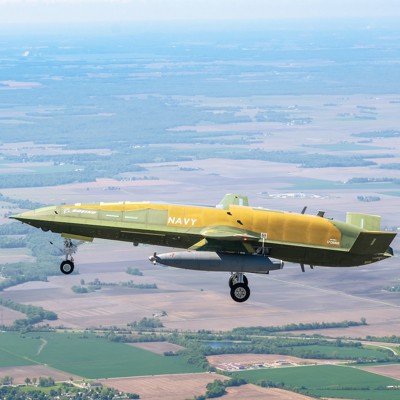
The Stingray delay compresses the Navy's window to validate carrier-based autonomous refueling before the 2027-2028 Taiwan contingency planning cycle closes. If IOC slips further, strike group commanders will plan around manned tanker constraints — fewer sorties, shorter combat radius — which directly reduces the sortie generation rate modeled for contested operations.
This forces Pacific Command to either request additional carrier deployments (budget/readiness impact) or accept degraded air wing range as a planning assumption.
This kills near-term carrier air wing range extension.
Until 2029, the Navy operates without organic aerial refueling on the deck — a capability every carrier strike group combat model assumes. For Pacific Command, this means extended transit times to contested areas and reduced loiter time over Taiwan or the South China Sea. Boeing bears the reputational cost of a third consecutive major delay on a program that was supposed to be straightforward.
The slip also opens space for alternative tanker concepts (manned or foreign) to gain traction in allied navies, potentially fragmenting carrier interoperability standards.
What specific technical issue triggered the three-year slip? The article cites 'a variety of delays' but doesn't break down whether this is software integration, deck handling, or carrier systems compatibility. That distinction matters for whether the delay is recoverable or structural.
Fault Lines
Strategic intelligence, synthesized daily — with a public track record. Every call graded against what actually happened.