Turkey Hosts Libya, Syria in First Joint Military Exercise; Ankara Deepens Regional Footprint
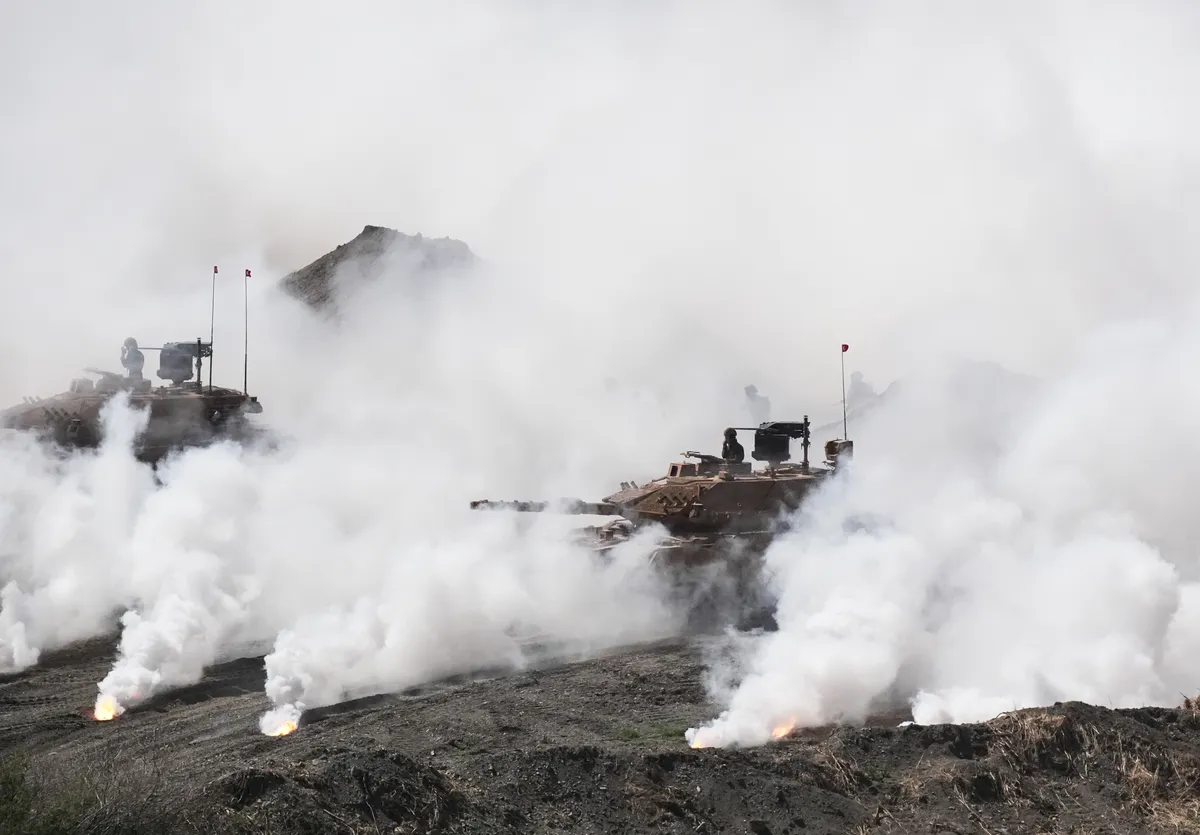
Turkey has been systematically converting military advisory missions into forward-deployed influence platforms — Libya (since 2020 GNA intervention), Syria (Idlib buffer and counterterrorism operations), and now Iraq are all anchored by Turkish military presence. Joint exercises codify these relationships without triggering NATO article 5 obligations or US congressional scrutiny.
If Libya's government consolidates (currently contested between Tripoli GNA and Benghazi-based Haftar), a Turkey-trained, Turkey-equipped military becomes Ankara's primary lever in North Africa. For Syria, the exercise signals continued Turkish commitment to Assad's government despite NATO-wide sanctions hesitancy — a subtle repositioning ahead of any US-Russia negotiation over Syria's future.
Turkey is operationalizing military influence across the eastern Mediterranean and Levant through joint training, locking in access and interoperability with two strategically positioned states while the US pivot to Indo-Pacific competition leaves the region less densely covered.
The mechanism is straightforward: joint exercises establish doctrine compatibility, signal commitment to allied governments facing domestic instability (Libya's GNA, Syria's Assad), and create institutional dependencies on Turkish military expertise and spare parts.
Watch whether follow-on exercises expand to include air defense integration or naval coordination — that signals Turkey is moving from advisory posture to operational alliance-building.
Did Turkey coordinate these exercises with NATO allies (Greece, US, UK), or did Ankara conduct them independently? The answer determines whether this is burden-sharing or strategic freelancing.
Fault Lines
Strategic intelligence, synthesized daily — with a public track record. Every call graded against what actually happened.