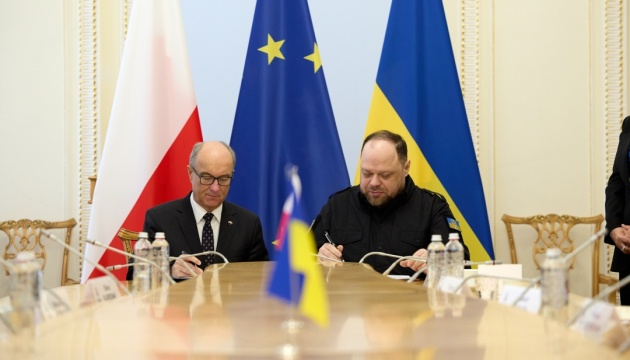
Ukraine-Poland Parliamentary Declaration Formalizes EU Integration Support Framework
Poland's formalized legislative role accelerates or constrains Ukraine's ability to adopt NATO-standard defense procurement and interoperability requirements before full membership.
If the working group includes defense procurement representatives, it can harmonize Ukrainian weapons specifications with NATO allies faster than EU consensus-building typically allows, reducing the integration lag that currently forces Ukrainian forces to operate with hybrid Soviet-era and Western systems.
If it remains purely political, the declaration signals intention but creates no procurement mechanism — leaving Ukraine dependent on bilateral supply agreements rather than coordinated allied industrial capacity.
This formalizes Poland's role as Ukraine's primary EU institutional sponsor at a critical juncture in accession negotiations.
Poland controls the EU Council presidency rotation and holds veto power over unanimous consent requirements in defense procurement and sanctions harmonization. The working group's composition and mandate will determine whether Poland can force faster NATO interoperability standards adoption (critical for weapons system integration) or whether EU bureaucratic processes delay Ukrainian force modernization timelines.
Watch whether the declaration includes binding commitments on defense industrial cooperation or remains symbolic.
The article does not specify the working group's composition, timeline, or whether it carries binding legislative authority versus advisory status.
Fault Lines
Strategic intelligence, synthesized daily — with a public track record. Every call graded against what actually happened.