UK Develops US-Free Cruise Missiles for Ukraine; Decouples Allied Munitions From American Supply Chain
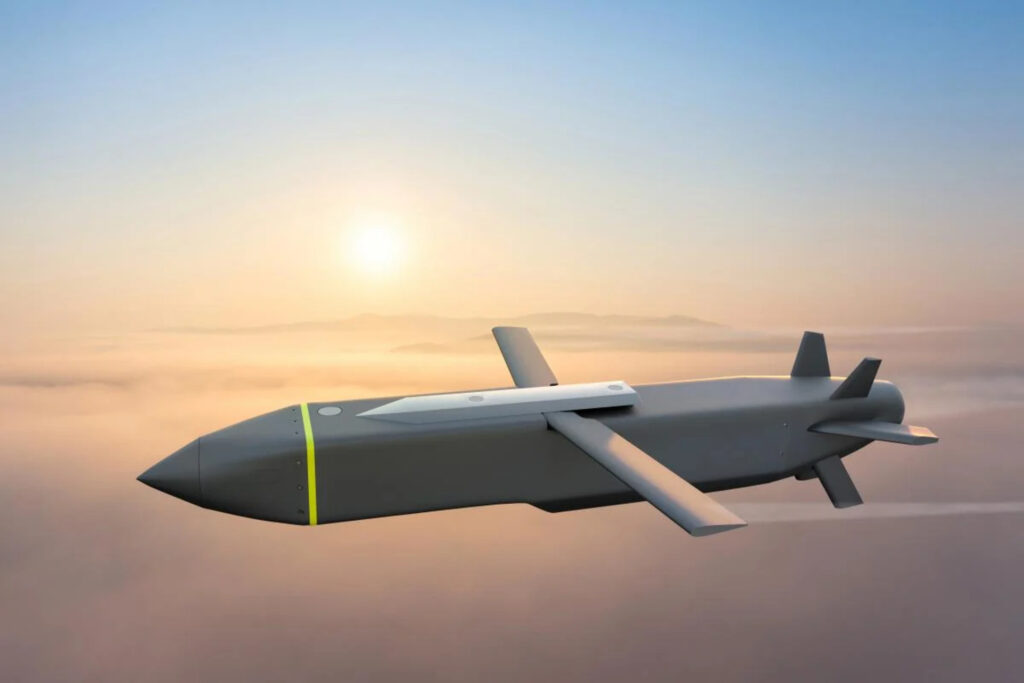
This tracks directly to the UK's June 2026 announcement of the GBP 752M frozen-Russian-assets weapons package for Ukraine and the acceleration of the joint European long-range strike program (reported June 18). The UK is now executing a two-track strategy: immediate drone/air-defense aid funded from Russian assets, and medium-term indigenous missile development to bypass U.S. supply dependencies.
If BAE Systems and Rolls-Royce succeed in removing American content, European primes gain a competitive advantage in third-party sales to non-NATO allies (Poland, Finland, Baltics, potentially Japan and South Korea via AUKUS) — markets where U.S. export controls create friction.
This signals a deliberate European pivot away from U.S.-integrated supply chains for critical munitions — a direct consequence of uncertainty about American commitment under the Trump administration's burden-sharing demands.
The UK Ministry of Defence and its primes (BAE Systems, Rolls-Royce, and missile integrators) are now designing around U.S. ITAR and export control constraints rather than working within them, which means future European long-range strike capabilities will be architecturally independent of American components by design.
If this prototype transitions to production, it forces NATO allies to choose between U.S.-compatible systems (interoperable but dependent) and European-sovereign systems (autonomous but fragmented). The next inflection is the UK's formal procurement decision — expected within the FY26-27 planning cycle — which will determine whether allied nations adopt this architecture or remain tethered to American supply chains.
Did the UK Ministry of Defence explicitly direct contractors to eliminate U.S. parts, or did BAE Systems and other primes make this architectural choice independently to hedge against future export controls?
Fault Lines
Strategic intelligence, synthesized daily — with a public track record. Every call graded against what actually happened.