UK Operates Military Repair Network Inside Ukraine; NATO Forward Logistics Expands
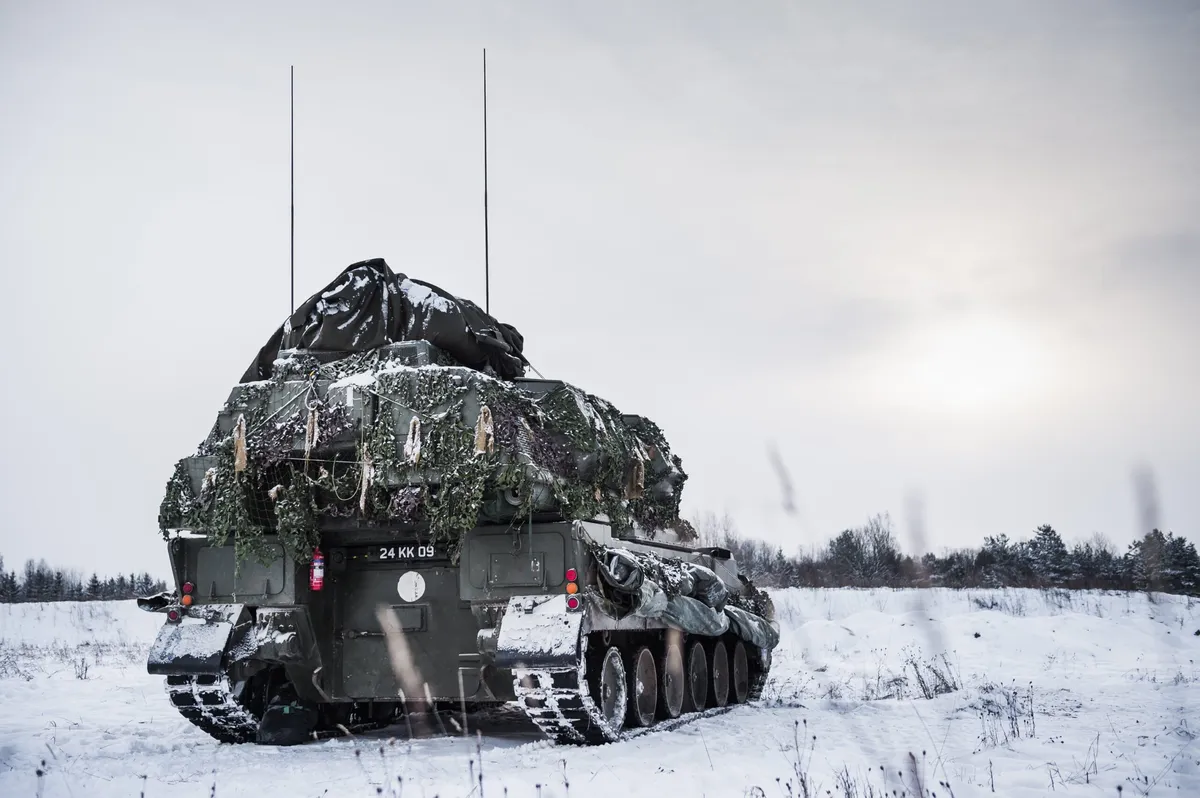
UK forward repair capacity directly reduces Ukrainian dependency on rear-echelon logistics, shortening equipment turnaround and sustaining offensive tempo — which in turn pressures Russian supply lines and affects the pace of attrition on both sides.
If Russia targets these facilities, UK military presence in Ukraine becomes a direct escalation trigger, converting logistics into a geopolitical friction point between NATO and Russia. This also creates procurement pressure on UK defense primes (BAE Systems, Rolls-Royce) to scale spare parts production and ruggedized maintenance platforms for distributed operations.
This disclosure signals NATO willingness to operationalize support infrastructure in active theater — a material escalation in commitment that moves beyond arms shipment to embedded logistics.
The public acknowledgment (rather than continued operational silence) suggests either confidence in Ukrainian territorial control or a deliberate signal to Moscow that NATO is willing to absorb escalation risk.
For defense primes, this validates sustained demand for repair-capable systems and spare parts pipelines; for program managers, it indicates that forward-deployed maintenance contracts will remain a procurement priority through 2026-27. The critical unknown is whether this invites Russian targeting of UK facilities — if so, UK force posture in Eastern Europe becomes a escalation variable.
The article does not specify: facility locations, number of sites, types of equipment serviced, personnel count, whether facilities have air defense, or whether this arrangement includes other NATO members operating similar networks.
Fault Lines
Strategic intelligence, synthesized daily — with a public track record. Every call graded against what actually happened.