Marines test distributed kill-web ops at Steel Knight 25; doctrine shift underway
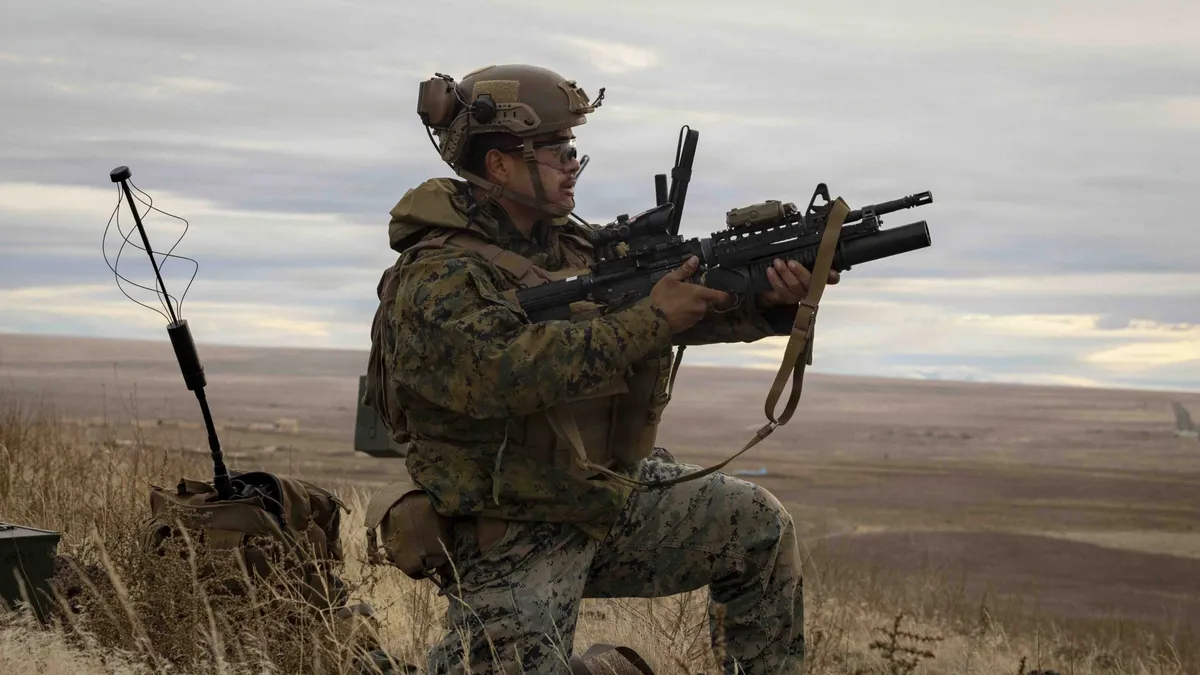
This connects two pillars: (1) Power Projection — doctrine validation of distributed kill-web operations directly shapes force design and weapon system requirements; (2) Market Forces — successful demonstration drives capital allocation toward edge AI, low-latency comms, and autonomous fires platforms, while failure triggers reallocation to network resilience and human-in-the-loop systems.
The mechanism is procurement: if kill-web tactics prove operationally viable, USMC will accelerate fielding timelines and increase unit buy quantities, benefiting Anduril (Lattice OS for autonomous coordination), Palantir (real-time fusion), and RTX (sensor-to-shooter networks).
This signals the Marine Corps is moving from doctrine to field validation of distributed operations under contested comms and sensor degradation.
If the exercise demonstrated viable tactics for small-unit autonomous targeting and fires without centralized command, it validates investment in edge AI, low-latency networking, and disaggregated command-and-control—forcing procurement priorities toward Palantir, Anduril, RTX's Raytheon division (sensor fusion), and small-form-factor munitions (Switchblade, Loitering Attack Munitions).
Conversely, if the exercise revealed critical gaps in contested-environment comms or AI decision latency, it could delay fielding and redirect funds toward hardened networks and human-in-the-loop safeguards. The outcome determines whether USMC procurement accelerates autonomous systems or doubles down on resilience and redundancy.
The article does not specify which systems were tested, which gaps emerged, or whether the exercise validated or exposed shortfalls in contested-environment performance—critical to assessing whether this drives procurement acceleration or recalibration.
Fault Lines
Strategic intelligence, synthesized daily — with a public track record. Every call graded against what actually happened.